What to Do When Your Car Slides Off the Road in Edmonton Winter
One moment you’re driving carefully on an Edmonton winter road. The next moment, your car is sliding sideways, and before you can react, you’re in the ditch. It happens fast, and it happens to thousands of Edmonton drivers every winter—even experienced ones with proper winter tires.
Sliding off the road is terrifying, but what you do in the minutes after can make a major difference in your safety and the cost of recovery. This guide walks you through exactly what to do when your car ends up in a ditch, snowbank, or off the road during Edmonton’s winter months.
If you’re reading this while stuck right now, here’s the short version: Stay calm, check for injuries, get to safety if needed, and call Edmonton Towing at (780) 652-0521 for 24/7 vehicle recovery service.
Why Cars Slide Off Roads in Edmonton Winter
Understanding why vehicles lose control helps you prevent future incidents and explains what responders need to know about your situation.
Black Ice
Edmonton’s freeze-thaw cycles create invisible sheets of ice on roads, especially on bridges, overpasses, and shaded areas. Black ice is particularly dangerous because it looks like wet pavement until your tires lose grip. The Anthony Henday, Yellowhead Trail, and Whitemud Drive are notorious for black ice patches during temperature swings.
Packed Snow and Ice Ruts
After snowfall, traffic compresses snow into hard-packed ice ruts. When your tires catch the edge of a rut, your vehicle can suddenly veer sideways. This is especially common on residential streets and connector roads that don’t get priority snow clearing.
Reduced Visibility
Blowing snow, heavy snowfall, and fog reduce your ability to see road edges, curves, and other vehicles. In whiteout conditions, drivers sometimes don’t realize they’ve left the road until they feel the shoulder drop away.
Overcorrection
When a vehicle starts to slide, the natural instinct is to jerk the wheel and slam the brakes. Both actions make the slide worse. Many ditch incidents happen not from the initial slip but from the driver’s overcorrection.
Speed Too High for Conditions
Posted speed limits assume ideal conditions. On icy or snow-packed roads, safe speeds may be 20-40 km/h below posted limits. Even careful drivers sometimes misjudge how slippery conditions really are.
Immediate Steps After Your Car Leaves the Road
The moments after sliding off the road are critical. Follow these steps in order.
Step 1: Stay Calm and Assess
Take a breath. Your car may have stopped at an angle, partially buried in snow, or tilted in a ditch. Before doing anything else, take a few seconds to assess your situation. Is the car stable or still moving? Are you injured? Are passengers injured? Is there immediate danger (fire, water, oncoming traffic)?
Step 2: Check Yourself and Passengers for Injuries
Adrenaline can mask pain from injuries. Carefully check yourself for any pain, especially neck and back pain. Ask passengers how they feel. If anyone has serious injuries, especially head, neck, or back injuries, call 911 immediately and do not move them unless the vehicle is on fire or in immediate danger.
Step 3: Turn Off the Engine (Usually)
If your car is stable, turn off the engine to prevent fire risk if there’s fuel leakage and to conserve fuel if you’ll be waiting for help. However, if it’s extremely cold and you’re not in immediate danger, you may want to keep the engine running for heat while you assess the situation.
Step 4: Turn On Hazard Lights
Make your vehicle visible to other drivers immediately. Even if you’re off the road, other vehicles may not see you in low visibility conditions, and you don’t want a secondary collision.
Step 5: Assess Your Vehicle’s Position
Before exiting, look at where your car is positioned. Is it on a slope that could cause it to roll further if disturbed? Is the ditch deep with water or soft mud underneath the snow? Is traffic nearby that could pose a danger if you exit? Are you blocking any portion of the road?
Step 6: Exit Safely If Needed
If you need to exit the vehicle, do so carefully. Exit from the side away from traffic if possible. Watch your footing—the ground may be icy or uneven. If your car is tilted, the door may be heavy to open or may swing open unexpectedly. Move to a safe location away from traffic but visible to rescuers.
Should You Try to Drive Out?
Sometimes you can drive out of a minor slide-off. Other times, attempting to drive out causes more damage. Here’s how to decide.
When You Might Be Able to Drive Out
You may be able to self-recover if your vehicle is barely off the pavement with all wheels still making contact, the ditch is shallow and flat-bottomed, there’s no visible damage to your vehicle, you have traction (not spinning on ice), and the path back to the road is clear.
When You Should NOT Try to Drive Out
Do not attempt self-recovery if your vehicle is tilted at a significant angle, any wheels are hanging or not touching ground firmly, you’re high-centered (frame resting on snow/ground), the ditch is deep with steep sides, you suspect damage to steering, suspension, or drivetrain, you’re on soft ground that could swallow your tires deeper, or spinning your wheels just digs you deeper.
If You Decide to Try
Turn off traction control (it can limit power when you need it). Turn your wheels straight. Gently apply gas—no spinning. Try rocking between drive and reverse with gentle throttle. If you don’t make progress in 2-3 attempts, stop. Continued attempts can damage your transmission and dig you deeper.
When to Call for Professional Vehicle Recovery
Most ditch situations in Edmonton require professional recovery. Here’s when to call winch out service.
Call Immediately If:
Your vehicle is tilted or in an unstable position. Any part of your vehicle is in water. You’ve tried gentle self-recovery without success. Your vehicle appears damaged. You’re in a dangerous location (highway, blind curve). Weather conditions are deteriorating. It’s very cold and you don’t have survival supplies. You’re blocking traffic or creating a hazard.
What to Tell the Dispatcher
When you call Edmonton Towing at (780) 652-0521, provide your exact location (road name, nearest intersection or landmark, direction you were traveling), your vehicle information (make, model, color), how your vehicle is positioned (angle, depth in ditch, which direction it’s facing), whether there’s damage you can see, whether anyone is injured, and current conditions (visibility, traffic).
What Happens During Professional Vehicle Recovery
Understanding the recovery process helps you know what to expect and why it’s worth calling professionals.
Assessment
Our tow truck operator will assess your vehicle’s position, the terrain, and the safest recovery approach. They’ll look for damage, check ground conditions, and determine the right equipment to use.
Equipment Selection
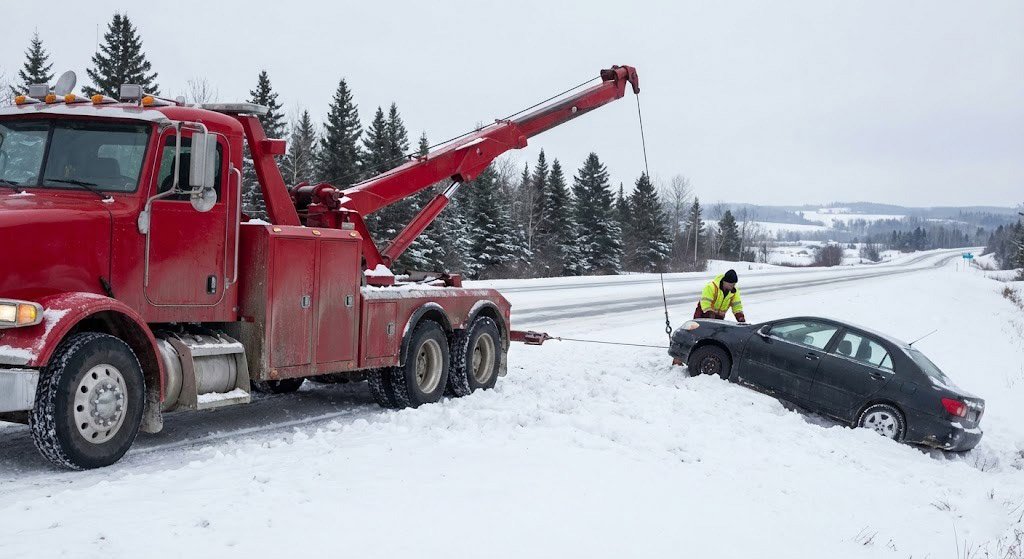
Depending on your situation, recovery may involve a winch to pull your vehicle from the ditch, a boom or lift to stabilize tilted vehicles, a flatbed for vehicles that shouldn’t be driven, or dollies for vehicles with damaged wheels or drivetrain.
Safe Extraction
The operator will attach recovery equipment to your vehicle’s designated tow points (not the bumper or frame rails that aren’t designed for it). They’ll pull or lift your vehicle at the correct angle to avoid additional damage.
Damage Assessment
Once your vehicle is on solid ground, the operator can help assess whether it’s safe to drive or needs to be towed to a mechanic. Damage isn’t always visible—hitting a ditch can damage suspension, steering, and alignment even if the body looks fine.
Transport If Needed
If your vehicle needs repairs, we can provide flatbed towing to your preferred mechanic or dealership anywhere in Edmonton.
Common Mistakes After Sliding Off the Road
Avoid these errors that can make your situation worse or more expensive.
Spinning Your Wheels Aggressively
Flooring the gas when stuck doesn’t help—it melts snow under your tires into ice, digs ruts, and can overheat your transmission. Gentle, steady throttle or nothing at all.
Letting Someone Yank You Out with a Chain
A well-meaning passerby with a truck and chain can cause serious damage. Chains can snap under tension (dangerous), and pulling at the wrong angle or attachment point can damage your vehicle’s frame or suspension. Professional recovery equipment and techniques exist for good reason.
Standing in Dangerous Locations
If you exit your vehicle, don’t stand on or near the road, especially at night or in low visibility. Other vehicles may not see you. Move well away from traffic and stay visible to rescuers.
Waiting Too Long to Call
Conditions can deteriorate quickly. What seems like a minor inconvenience can become an emergency if temperatures drop further, a storm moves in, or your phone battery dies. Call for help early.
Ignoring Possible Vehicle Damage
Even if your car “seems fine” after a ditch excursion, have it inspected. Bent suspension components, wheel alignment issues, or damaged steering parts may not be obvious but can cause handling problems or accelerated tire wear.
Insurance and Documentation
Protect yourself financially by documenting the incident properly.
Take Photos
Before your vehicle is moved, photograph the scene from multiple angles if it’s safe to do so. Capture your vehicle’s position, the road conditions, any damage, weather conditions, and any contributing factors (ice, poor visibility markers).
Report to Police If Required
In Alberta, you must report to police if anyone is injured, total damage appears to exceed $2,000, or a vehicle must be towed from the scene. For minor ditch incidents with no injuries and minimal damage, a police report may not be required, but check with your insurance company.
Contact Your Insurance Company
Report the incident to your insurance company promptly. Single-vehicle ditch incidents are typically covered under collision coverage. Your insurance may also cover towing costs.
Keep Towing Receipts
Save all documentation from your tow and recovery service for insurance reimbursement.
How to Prevent Sliding Off the Road
While you can’t control the weather, you can reduce your risk of ending up in a ditch.
Slow Down for Conditions
The posted limit is a maximum for ideal conditions, not a target for icy roads. When roads are slippery, reduce your speed by 30-50% and increase following distance to 6-8 seconds.
Use Proper Winter Tires
All-season tires lose significant grip below 7°C. Quality winter tires with the three-peak mountain snowflake symbol provide dramatically better traction in Edmonton’s conditions.
Know How to Handle a Slide
If your car starts to slide, don’t panic. Take your foot off the gas. Don’t slam the brakes (light braking is okay if you have ABS). Steer gently in the direction you want to go. Look where you want to go, not at what you’re trying to avoid.
Avoid Sudden Inputs
Sudden acceleration, hard braking, and sharp steering all reduce traction. Make all inputs gradual and smooth.
Watch for Problem Areas
Bridges and overpasses freeze first. Shaded areas stay icy longer. Intersection approaches get polished smooth. Curves require more traction than straight roads. Be extra cautious in these areas.
Edmonton Areas Where Slide-Offs Are Common
Some locations see more winter incidents due to road design, traffic patterns, or exposure to elements.
The Anthony Henday ring road has high speeds combined with exposed sections prone to drifting and ice. Whitemud Drive curves and interchanges become treacherous in icy conditions. The Yellowhead Trail sees icing on the overpass sections in Highlands and industrial areas. River valley roads around Glenora and Belgravia have steep grades that challenge traction. Residential areas in Mill Woods and other neighbourhoods have ice ruts on side streets that haven’t been cleared.
No matter where in Edmonton your incident occurs, our citywide recovery service can reach you.
Frequently Asked Questions
How much does it cost to get pulled out of a ditch in Edmonton?
Winch out costs depend on your vehicle size, the severity of the situation, and your location. Simple recoveries start around $150-200, while complex situations requiring additional equipment cost more. Edmonton Towing provides upfront quotes before dispatch—call (780) 652-0521 for a free estimate.
How long will I have to wait for a tow truck?
In normal conditions, we typically arrive within 30 minutes for most Edmonton locations. During major storms, wait times may be longer due to high demand and road conditions. Call early to get in the queue.
Will my car be damaged from going in the ditch?
It depends on the speed of impact and what you hit. Even low-speed ditch incidents can damage suspension, wheels, and alignment. Have your vehicle inspected even if there’s no visible body damage.
Should I call 911 or a tow truck?
Call 911 if anyone is injured, you’re in immediate danger, or there’s a serious hazard to other traffic. For non-emergency recovery, call Edmonton Towing directly at (780) 652-0521. If you’re unsure, call 911 and they’ll advise.
What if my car is upside down or on its side?
Do not attempt to exit an unstable vehicle without professional assistance unless there’s immediate danger (fire, rising water). Call 911, stay as still as possible, and wait for emergency responders who have equipment for these situations.
Can I get pulled out by another truck instead of calling a tow service?
We don’t recommend it. Improper recovery techniques can damage your vehicle, and tow straps or chains can snap under tension, causing injury. Professional recovery equipment and trained operators are worth the investment.
What if I slid off the road on private property?
We recover vehicles from private property, parking lots, and anywhere accessible by our trucks. Let our dispatcher know the location details when you call.
Call Edmonton Towing for Fast Vehicle Recovery
Sliding off the road is stressful, but you don’t have to handle it alone. Edmonton Towing provides professional winch out and vehicle recovery service 24 hours a day, 7 days a week, including holidays and during severe weather.
Our experienced operators have the equipment and expertise to recover your vehicle safely, without causing additional damage. Whether you’re in a shallow ditch on a residential street or stuck in deep snow on the Henday, we can help.
Call us now at (780) 652-0521. We’ll give you an upfront quote, dispatch the nearest available truck, and get you back on the road as quickly and safely as possible.
Stay safe on Edmonton’s winter roads—and save our number so you’re ready if you ever need us.