
Why Your Car Won’t Start in Edmonton Cold: 7 Common Causes
You turn the key, and nothing happens. Or maybe you hear clicking sounds, or the engine cranks weakly but won’t turn over. When your car refuses to start during an Edmonton cold snap, you’re facing one of winter’s most frustrating problems. The good news is that most no-start situations in cold weather have identifiable causes and clear solutions. This guide walks you through the seven most common reasons cars won’t start in Edmonton’s extreme cold, how to diagnose the problem, and what to do to get back on the road quickly.
1. Dead or Weak Battery
A dead battery is the number one reason cars won’t start in Edmonton winter, accounting for more than 60% of cold weather no-starts. Car batteries rely on chemical reactions to generate electrical power, and these reactions slow dramatically in extreme cold. At -18°C, a fully charged battery loses about 40% of its cranking power. By -30°C, that same battery operates at barely 40% capacity while your engine requires nearly double the normal power to turn over thick, cold oil and stiff mechanical components.
You’ll know it’s a battery issue if you turn the key and hear rapid clicking sounds—this is the starter solenoid trying to engage but lacking power. Or your engine might crank very slowly, turning over sluggishly before giving up. Dashboard lights may be dim or flicker when you try starting. In severe cases, nothing happens at all when you turn the key—no lights, no sounds, completely dead.
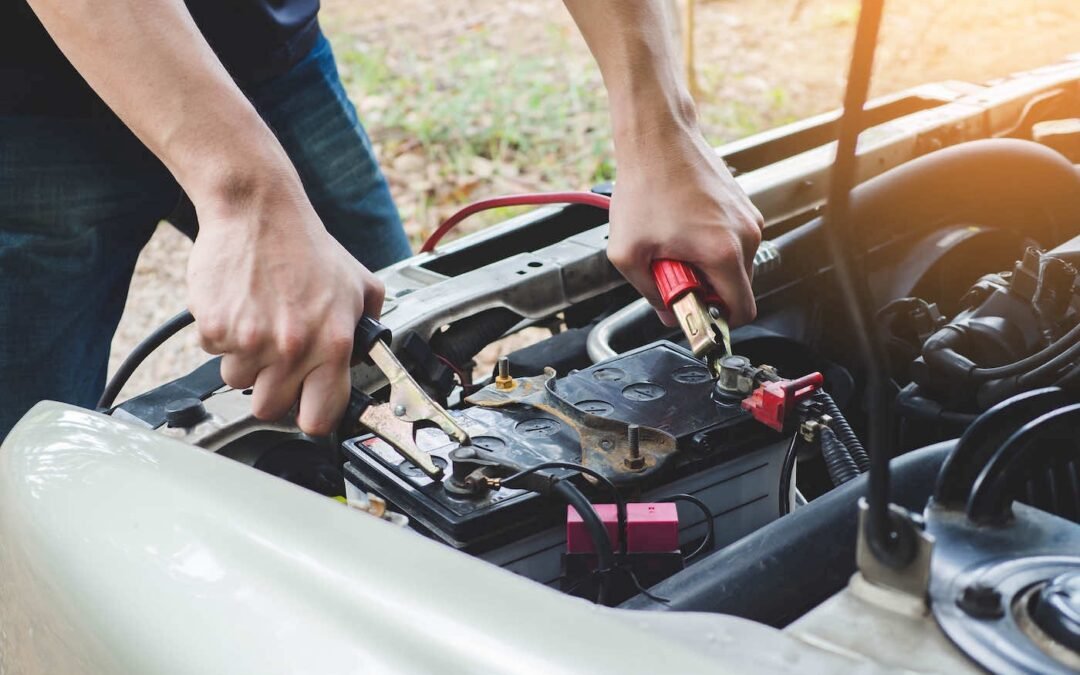
If your battery is over three years old, it’s especially vulnerable to cold weather failure. Internal plates degrade over time, and aging batteries can’t hold a charge like new ones. The combination of reduced capacity from age and power loss from extreme cold creates the perfect storm for dead battery situations. When you’re dealing with a dead battery, call (780) 652-0521 for professional battery boost service. Our commercial-grade jump starters work reliably even in -40°C conditions, and we’ll test your battery after boosting to determine if it needs replacement.
2. Frozen Fuel Lines
Water contamination in your fuel tank can freeze in Edmonton’s extreme cold, blocking fuel lines and preventing fuel from reaching your engine. This happens when condensation forms inside your gas tank—warm air enters when you refuel, then cools and condenses into water droplets that sink to the bottom. In temperatures below -20°C, this water freezes solid, blocking fuel flow.
Frozen fuel lines typically present as an engine that cranks normally but won’t start or catch. Your starter motor sounds healthy, turning the engine over with good speed, but the engine never fires. You might smell gas, indicating the engine is trying to start but can’t. Unlike battery problems where you hear clicking or slow cranking, frozen fuel line issues sound like a healthy car that simply refuses to run.
Prevention is the best solution. Keep your gas tank at least half full throughout winter—this reduces the air space where condensation can form. Use winter fuel additives that prevent water from freezing and help separate water from gasoline. If you suspect frozen fuel lines, the car needs to warm up gradually in a heated garage. Attempting to force-start a car with frozen fuel lines can damage your fuel pump and injectors. Call (780) 652-0521 for breakdown towing to a heated repair facility where mechanics can safely thaw and repair the fuel system.
3. Thick Engine Oil
Motor oil thickens significantly in cold temperatures, becoming viscous and syrupy. In extreme Edmonton cold, conventional oil can become so thick that your engine can’t turn it over, even with a fully charged battery providing maximum power. The starter motor strains against thick oil, draining your battery quickly and sometimes failing to spin the engine at all.
You’ll recognize this problem if your engine cranks very slowly with a labored, grinding sound, your battery seems fine but the engine barely turns, or the engine turns a few times then stops, unable to maintain momentum. Cold oil problems often accompany extreme temperature drops—your car started fine yesterday at -15°C but won’t budge today at -35°C.
The solution is using proper winter-grade oil. If you’re still using 10W-30 or higher weight oil, it’s too thick for Edmonton winters. Switch to 5W-30 or 0W-30 synthetic oil, which flows better in extreme cold. Synthetic oil maintains its viscosity across a wider temperature range and provides better cold-start protection. Have your oil changed before winter arrives, ideally in October when temperatures start dropping but before the first hard freeze. If your engine won’t turn due to thick oil, the vehicle needs to warm up in a heated space. Towing to an indoor facility is often necessary—call (780) 652-0521 for safe transport.
4. Failed Starter Motor
The starter motor is an electric motor that physically spins your engine to begin the combustion process. In cold weather, starter motors work harder due to thick oil and stiff components, and the added strain can cause failure. Cold also makes metal components brittle and can crack worn starter parts that were marginal in warmer weather.
A failed starter typically presents as a single loud click when you turn the key, followed by nothing. The click is the starter solenoid engaging, but the motor itself won’t spin. Sometimes you hear grinding or whirring sounds without the engine turning over—this indicates the starter is trying to engage but can’t grip the flywheel. In some cases, nothing happens at all when you turn the key, similar to a dead battery but with dashboard lights remaining bright.
Starter failure requires professional diagnosis because it mimics battery problems. The difference is that battery issues cause rapid clicking or slow cranking, while starter failure produces a single click or grinding sounds. If you suspect starter failure, don’t keep trying to start the car—this drains your battery and can damage other components. You’ll need towing service to a mechanic for starter replacement. Cold-weather starter failures are common enough that most Edmonton repair shops stock replacement starters for popular vehicle models.
5. Clogged Fuel Filter
Your fuel filter removes contaminants from gasoline before it reaches your engine. Over time, filters accumulate sediment, water, and debris. In cold weather, any water or contaminants in the filter can freeze, completely blocking fuel flow. Additionally, diesel fuel can gel in extreme cold if not treated with winter additives, clogging filters in diesel vehicles.
A clogged fuel filter causes symptoms similar to frozen fuel lines—the engine cranks normally but won’t start or catch, or it starts briefly then dies immediately. You might experience this after the car has been sitting overnight in extreme cold. Some vehicles will start after multiple attempts but run rough or stall repeatedly. If the filter is partially clogged, the engine might start when cold but die once you try driving and the fuel demand increases.
Fuel filters should be replaced according to your vehicle’s maintenance schedule, typically every 30,000-50,000 km. If you’ve neglected filter changes, winter cold will expose this problem dramatically. A clogged filter requires towing to a repair facility for replacement—it’s not a roadside fix. Prevention is straightforward: have your fuel filter replaced during your pre-winter maintenance, ideally in October before temperatures drop. For diesel vehicles, use winter-blend diesel fuel and diesel fuel additives to prevent gelling.
6. Faulty Ignition System
Your ignition system generates the high-voltage spark needed to ignite the fuel-air mixture in your engine cylinders. Cold weather stresses ignition components including spark plugs, ignition coils, and plug wires. Worn spark plugs struggle to fire reliably in cold temperatures, cracked plug wires leak voltage, and weak ignition coils can’t generate sufficient spark when cold.
Ignition problems typically cause the engine to crank normally but refuse to start, or start and immediately stall. You might notice a strong gasoline smell because unburned fuel accumulates in the cylinders when spark plugs aren’t firing. Some vehicles will start after many attempts but run rough, misfire, or lack power. If your check engine light was on before the cold snap, ignition problems were likely already present and cold weather made them worse.
Spark plugs should be replaced according to your vehicle’s maintenance schedule—typically every 50,000-100,000 km depending on plug type. If you drive an older vehicle or haven’t replaced plugs recently, cold weather will reveal worn components. Ignition system repairs require proper tools and diagnostic equipment, so you’ll need professional help. If your car won’t start due to ignition problems, arrange towing to a repair shop where mechanics can diagnose and fix the issue.
7. Low or Contaminated Fuel
Running low on fuel in winter creates multiple problems. An empty or nearly empty tank allows more air space for condensation, increasing water contamination risk. Fuel pumps are cooled by gasoline—running low causes pumps to overheat and fail prematurely. In extreme cold, any water in a low tank freezes quickly, causing immediate starting problems. Additionally, sediment that normally settles at the tank bottom gets sucked into fuel lines when the tank is low.
Low fuel problems present as an engine that cranks but won’t start, sputtering or dying immediately after starting, or running rough then stalling. Your fuel gauge obviously shows empty or nearly empty. Some vehicles have fuel pump issues show up as a complete failure to start with no obvious symptoms—the pump simply stopped working due to overheating or debris damage.
The solution is simple but not always convenient—you need fuel. If your car won’t start due to low fuel, you’ll need emergency fuel delivery or towing to a gas station. Some roadside assistance services offer fuel delivery, bringing enough gasoline to get you to the nearest station. If your fuel pump has failed from running low, you’ll need towing to a mechanic for pump replacement. Prevention is easy: never let your tank drop below half full during winter. Make refueling part of your routine to avoid this preventable problem.
How to Diagnose Your No-Start Problem
When your car won’t start, follow this diagnostic sequence to identify the likely cause. First, turn the key and listen carefully. If you hear rapid clicking sounds, your battery is dead or weak—this is by far the most common issue. Call (780) 652-0521 for immediate battery boost service.
If you hear a single loud click, your starter motor has likely failed. If the engine cranks normally but won’t catch, you’re dealing with fuel delivery problems—frozen fuel lines, clogged filter, or low fuel. Check your fuel gauge first. If you hear grinding or whirring without the engine turning, your starter is trying to engage but can’t. If nothing happens at all—no sounds, no lights—your battery is completely dead.
Also check your dashboard. Are dashboard lights bright or dim? Dim lights indicate battery problems. Do any warning lights appear? A check engine light or oil light can provide clues. Is your fuel gauge reading empty or nearly empty? Don’t overlook the obvious—running out of gas is more common than people admit, especially when cold weather reduces fuel efficiency.
What NOT to Do When Your Car Won’t Start
When faced with a no-start situation, avoid these common mistakes. Don’t keep trying to start your car repeatedly—if it hasn’t started after three attempts, continuing will only drain your battery further or damage other components. Don’t pour hot water on your engine or battery—rapid temperature changes can crack metal and battery cases. Don’t use starting fluid or ether unless you’re experienced—improper use can damage engines.
Don’t accept jump starts from strangers with improper equipment—incorrect connections can fry modern vehicle electronics. Don’t attempt major repairs in extreme cold—frozen fingers and brittle tools make this dangerous. Instead, call (780) 652-0521 for professional help. We’ll diagnose the problem and provide the right solution, whether that’s a battery boost, towing to a heated facility, or connecting you with emergency services.
Preventing Cold Weather No-Start Problems
Prevention is far easier than dealing with a dead car in -30°C weather. Here’s your complete pre-winter preparation checklist. Have your battery tested in October—most auto parts stores offer free testing. Replace batteries over three years old before winter. Switch to winter-grade synthetic oil, 5W-30 or 0W-30. Replace your fuel filter if it’s been over 30,000 km. Check and replace worn spark plugs. Keep your gas tank above half full always. Use a block heater or battery blanket on the coldest nights. Have your starter and charging system tested if you experienced any issues last winter.
Park in a heated garage whenever possible—even an unheated parkade is warmer than outdoor parking. If you must park outside, face your vehicle away from prevailing winds to reduce cold air exposure to the engine bay. Use a windshield cover to prevent ice buildup and reduce morning scraping time. These simple steps dramatically reduce your chances of no-start situations throughout Edmonton’s brutal winter.
When to Call for Help
Some no-start problems have simple solutions—a dead battery might need only a quick boost. Others require professional diagnosis and repair. Call for help immediately if your vehicle shows any of these signs: won’t start after three attempts, makes unusual sounds when trying to start, smells like gasoline or burning, shows warning lights you don’t recognize, or is stuck in a dangerous location like a busy highway shoulder.
Our 24/7 emergency service is available across all Edmonton neighborhoods including Downtown, Mill Woods, Strathcona, and surrounding areas. We provide battery boosts, breakdown towing, and complete roadside assistance—everything you need when your car won’t start in Edmonton’s cold.
Frequently Asked Questions
How long should I wait before trying to start my car again?
If your car doesn’t start after three attempts, stop trying and wait at least 10-15 minutes before attempting again. This gives your battery time to recover slightly and prevents flooding your engine with excess fuel. However, if the problem is a dead battery, waiting won’t help—you need professional battery boost service. Call (780) 652-0521 rather than continuing to drain your battery.
Will a battery boost damage my modern vehicle’s electronics?
Professional battery boosting performed correctly is completely safe for modern vehicles. Our technicians use commercial-grade equipment with proper voltage regulation and follow manufacturer procedures for your specific vehicle. The risk comes from improper jump starts using incorrect polarity, damaged cables, or jumping from vehicles with incompatible electrical systems. This is why professional service is safer than accepting help from strangers.
Can I drive my car immediately after a boost?
Yes, but drive directly to your destination or a repair facility. Your battery will recharge while driving, but this takes at least 30 minutes of continuous driving—not short stop-and-go trips. If your battery needed boosting due to age or damage, it may fail again soon. We recommend having your battery tested immediately after boosting to determine if replacement is needed. Don’t shut off your engine until you reach your destination or a safe location.
Why does my car start fine some mornings but not others?
This indicates a marginal battery or failing charging system. When temperatures are slightly warmer (-15°C), your battery has enough power to start. When temperatures drop further (-30°C), the same battery can’t provide sufficient power. This is a warning sign—your battery is near failure and should be replaced before it leaves you completely stranded. Temperature fluctuations expose weaknesses in aging batteries.
Should I let my car warm up before driving in extreme cold?
Modern vehicles don’t require long warm-up periods. Start your car and let it idle for 30-60 seconds, just long enough for oil to circulate. Then drive gently for the first few minutes until the engine reaches operating temperature. Idling for extended periods wastes fuel, produces emissions, and doesn’t warm your car as efficiently as driving. However, if your car had starting difficulties, let it run for 5 minutes to ensure it’s running smoothly before attempting to drive.
How much does battery boost service cost?
Battery boost service typically costs $99-$150 depending on your location and time of day. This includes dispatch, commercial-grade boosting equipment, and basic battery testing. If boosting doesn’t work and you need towing, we apply the boost cost toward your tow. Call (780) 652-0521 for an exact quote based on your location. We provide upfront pricing before dispatching—no hidden fees or surprise charges.
Can extreme cold permanently damage my battery?
Yes. If a partially discharged battery freezes, ice formation inside can crack internal plates and the battery case. Once frozen and damaged, the battery must be replaced—it cannot be recharged or repaired. This is why maintaining a full charge throughout winter is critical. A fully charged battery resists freezing down to -57°C, while a discharged battery can freeze at -10°C. Never attempt to boost or charge a visibly swollen or frozen battery.
What if my car won’t start and I’m late for work?
Call (780) 652-0521 immediately for priority service. Explain you need urgent help, and we’ll dispatch the nearest available vehicle. Average response time is 20-30 minutes for battery boosts. If the problem requires towing, we’ll arrange the fastest possible service. While waiting, notify your employer about the delay—vehicle problems in extreme cold are common and understood in Edmonton. Your safety is more important than punctuality.
Get Back on the Road Fast
Car won’t start? Don’t panic and don’t risk damaging your vehicle with repeated attempts or DIY fixes in extreme cold. Professional help is just a phone call away. Our experienced technicians respond quickly across Edmonton with the right equipment to diagnose and solve your problem—whether it’s a simple battery boost or towing to a repair facility.
Call (780) 652-0521 now for immediate dispatch. We’ll ask a few questions to understand your situation, provide an upfront price quote, and send help right away. Most battery boosts are completed within 30-40 minutes from your initial call. Available 24/7 including early mornings when most no-start situations occur. Stay warm, stay safe, and let us handle the cold, frustrating work of getting your vehicle started again.