Heavy Duty Towing Edmonton: Semi Trucks, Buses & Large Vehicles
🚛 Quick Answer
Heavy duty towing in Edmonton covers vehicles over 10,000 lbs — semi trucks, school buses, transit buses, RVs, construction equipment, and commercial vehicles. Pricing starts at $250–$500 for local heavy tows and varies by vehicle weight, recovery complexity, and distance.
Edmonton Towing operates 24/7 heavy duty tow trucks including wreckers, rotator cranes, and heavy-rated flatbeds capable of handling any vehicle on Alberta roads.
When a semi-trailer jackknifes on the Yellowhead, a city bus breaks down during rush hour on Jasper Ave, or a loaded dump truck rolls into a ditch on a rural highway — a regular tow truck isn’t going to cut it. These situations require heavy duty towing with specialized equipment, trained operators, and trucks rated for vehicles weighing 10,000 to 80,000+ pounds.
Heavy duty towing in Edmonton is a different category of service entirely. The trucks are bigger, the stakes are higher, the equipment costs more, and the operators need years of training. A botched heavy recovery can cause catastrophic secondary damage — to the vehicle, the road, and surrounding infrastructure.
This guide covers what qualifies as heavy towing, what it costs, what equipment is used, and how to find a reliable heavy duty tow truck service in the Edmonton area — whether you’re a fleet manager, owner-operator, or someone whose RV just died on the highway.
What Counts as Heavy Duty Towing?
Heavy towing refers to towing or recovering any vehicle that exceeds the capacity of a standard tow truck (typically rated for vehicles under 10,000 lbs / 4,500 kg). Here’s the weight class breakdown:
If you’re unsure whether your vehicle requires heavy truck towing, call (780) 652-0521 and describe the vehicle. We’ll dispatch the right equipment from the start — sending the wrong truck wastes time and money for everyone.
Types of Vehicles We Heavy-Tow in Edmonton
Edmonton Towing’s heavy duty towing service handles every large vehicle on Alberta roads:
🚚
Semi Trucks & Trailers
18-wheelers, tandem axle, loaded or unloaded
🚌
Buses
School buses, transit, charter, motorcoaches
🏗️
Construction Equipment
Excavators, loaders, graders, skid steers
🚐
RVs & Motorhomes
Class A, B, C motorhomes and fifth wheels
📦
Delivery & Box Trucks
Straight trucks, cube vans, moving trucks
🔥
Emergency & Utility Vehicles
Fire trucks, ambulances, utility trucks
🌾
Farm Equipment
Tractors, combines, grain trucks
⛽
Tanker Trucks
Fuel, water, chemical — HAZMAT-rated recovery
How Much Does Heavy Duty Towing Cost in Edmonton?
Heavy duty tow truck service costs significantly more than standard towing because of the specialized equipment, larger trucks, and additional time required. Here’s a realistic pricing guide for Edmonton:
💡 Why Heavy Towing Costs More
A heavy-duty wrecker can cost $300,000–$800,000+. A rotator crane truck can exceed $1 million. Operating costs, insurance, and the specialized training required for operators all contribute to higher rates. A complex recovery that takes 4–6 hours with multiple trucks isn’t cheap — but it’s far less expensive than the damage caused by improper recovery.
Heavy Towing Equipment: What We Use and Why It Matters
The equipment used in heavy duty towing determines whether a job is done safely or creates additional damage. Here’s what’s in the fleet and when each piece is deployed:
🔧 Heavy-Duty Wrecker
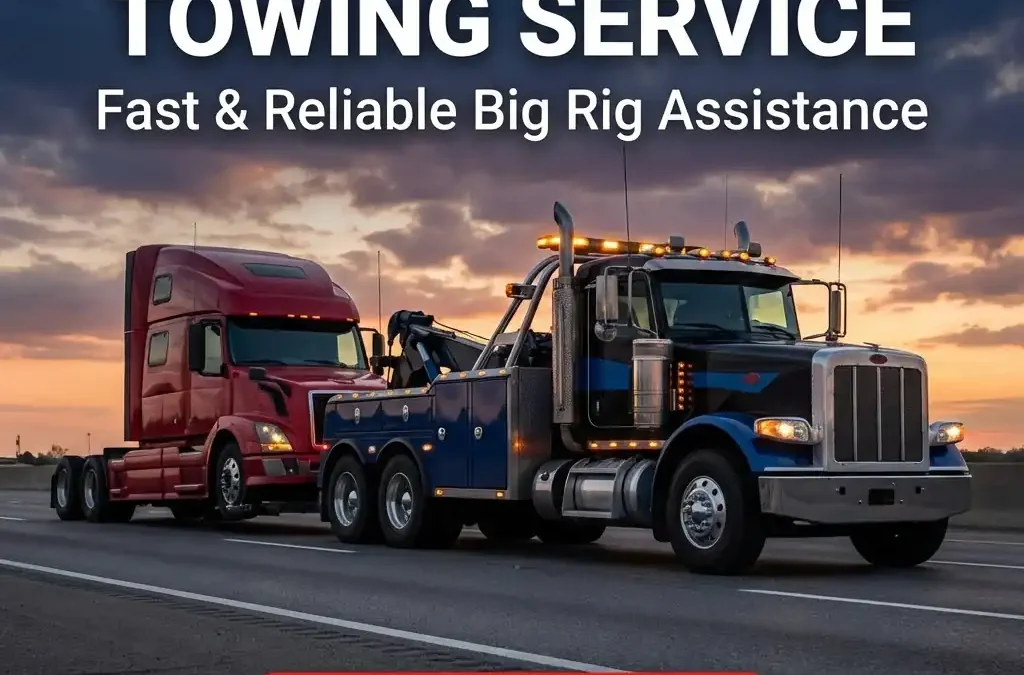
The workhorse of heavy towing. A heavy wrecker has a boom and winch system capable of lifting and towing vehicles up to 40,000+ lbs. Used for disabled semis, buses, and large trucks that can’t move under their own power. The boom lifts the front or rear of the vehicle while the remaining wheels roll.
🏗️ Rotator Crane Truck
The most capable (and expensive) piece of heavy recovery equipment. A rotator features a 360-degree rotating boom with lifting capacities of 30–75 tonnes. Essential for uprighting overturned trailers, lifting vehicles out of ditches or overpasses, and any situation where a straight pull won’t work. These units cost $1M+ and require operators with years of specialized training.
🛻 Heavy-Rated Flatbed / Landoll Trailer
For transporting heavy equipment (excavators, loaders, skid steers) that can be driven onto a trailer under their own power. Also used for disabled vehicles after they’ve been recovered and need transport. A Landoll trailer tilts hydraulically for easy loading without ramps. For lighter vehicles that also need flatbed transport, see our standard flatbed towing service.
⛓️ Winching Systems
Heavy-duty winches rated for 30,000–100,000+ lbs of pull. Used to extract vehicles from ditches, mud, snow, and other entrapments. Often combined with snatch blocks (pulleys) to multiply the pulling force. For standard winching scenarios, see our winching and recovery service.
Common Heavy Towing Scenarios in Edmonton
Edmonton’s heavy vehicle traffic — oil industry trucks, grain haulers, transit buses, and construction equipment — means heavy recovery situations are a daily occurrence. Here are the most common calls we handle:
🚛 Semi-truck breakdown on the Henday or QEII — Engine failure, blown turbo, transmission problems, or overheating. The truck can’t move and is blocking traffic. A heavy wrecker tows the cab and trailer (separately if needed) to the nearest truck repair facility.
🔄 Jackknifed trailer on icy roads — Edmonton’s winter road conditions cause dozens of jackknife incidents every season. Recovery involves carefully straightening the trailer relative to the cab without causing additional damage to either unit, then towing both to safety.
🚌 Disabled school or transit bus — Edmonton has a large fleet of school buses and ETS transit buses. A breakdown during service hours needs fast response to minimize public disruption. We maintain priority response for bus towing calls.
🕳️ Truck in a ditch or rolled over — Common on rural highways around Edmonton, especially Highway 2, Highway 16, and Highway 63. These jobs require heavy winching or rotator crane operations, often with load transfer if the trailer is carrying freight.
🏗️ Construction equipment transport — Moving excavators, wheel loaders, or graders from one job site to another when a low-boy trailer isn’t available. Also includes recovering equipment that’s stuck on muddy or unfinished sites.
🚐 RV and motorhome breakdown — Class A motorhomes can weigh 20,000–30,000+ lbs fully loaded. A standard tow truck can’t handle them. These typically need a medium or heavy wrecker and careful handling to avoid damaging the RV’s body or slide-outs.
24/7 Heavy Duty Towing & Recovery — Edmonton & Area
Semis • Buses • RVs • Heavy Equipment • Rotator Crane Recovery
Heavy Duty vs. Standard Towing: Key Differences
Calling a regular tow truck for a heavy vehicle wastes time and puts people at risk. Here’s why heavy towing is a distinct service:
🚗 Standard Towing
- Vehicles under 10,000 lbs
- Standard flatbed or wheel-lift truck
- 1 operator, 1 truck
- Simple hookup: 10–20 minutes
- $85–$160 for a local tow
- Minimal traffic management needed
🚛 Heavy Duty Towing
- Vehicles 10,000–80,000+ lbs
- Heavy wrecker, rotator, or rated flatbed
- 1–3+ operators per job
- Complex recovery: 1–6+ hours
- $250–$5,000+ depending on job
- Full traffic control often required
⚠️ Why the Right Truck Matters
Attempting to tow or recover a heavy vehicle with undersized equipment can snap cables, tip the tow truck, cause secondary damage to the vehicle being towed, and create major safety hazards for operators and nearby traffic. According to Transport Canada’s commercial vehicle safety standards, recovery operations must use equipment rated for the specific load being handled.
What to Do When Your Heavy Vehicle Breaks Down
A breakdown involving a semi, bus, or heavy equipment requires a slightly different response than a passenger vehicle. Here’s the correct protocol:
Activate all warning systems. Four-way flashers, marker lights, and if you carry them, deploy emergency triangles 50, 100, and 150 metres behind the vehicle (Alberta regulation for commercial vehicles on highways).
Contact your fleet dispatch or call for heavy towing directly. Call Edmonton Towing at (780) 652-0521. Provide: your exact location, the vehicle type and weight, the nature of the problem, and whether cargo transfer may be needed.
Stay safe. If you’re on a highway, stay inside the cab with your seatbelt on until help arrives. If you must exit, do so on the side away from traffic. Never stand between your vehicle and the guardrail.
Secure the load. If the vehicle is carrying hazardous materials, follow your HAZMAT placard and documentation protocols. Inform the towing operator about the load type — this affects the equipment and procedures used.
For general breakdown advice that applies to all vehicles, see our guide on what to do during a car breakdown in Edmonton. If the situation involves an accident, our accident towing service can also respond with heavy equipment, and we work directly with insurers through our insurance-approved accident towing process.
Commercial Fleet Towing Services for Edmonton Businesses
For fleet managers and trucking companies operating in the Edmonton region, having a reliable heavy duty tow partner is essential. Every hour a truck is down costs money — in delayed deliveries, driver downtime, and customer dissatisfaction.
Edmonton Towing offers fleet-focused heavy towing services including:
- Priority dispatch — Fleet accounts receive expedited response times
- Direct billing — Invoice directly to your company or insurance provider
- Cargo preservation — Careful load handling, transfer to secondary trailers when needed
- Impound and storage — Secure yard for vehicles awaiting repair or insurance assessment
- Documentation — Photos, condition reports, and chain-of-custody records for insurance claims
- Province-wide coverage — Long-distance heavy towing throughout Alberta
Heavy Towing in Edmonton’s Winter Conditions
Winter is peak season for heavy truck towing calls in Edmonton. Icy roads, poor visibility, and extreme cold create conditions that are challenging even for experienced heavy vehicle operators.
Black ice jackknifes: A loaded trailer on black ice can jackknife in seconds. Recovery involves carefully straightening the trailer angle, often using a rotator to control the trailer independently of the cab. This can take 2–4 hours on a busy highway.
Diesel gelling: At extreme temperatures (-25°C and below), diesel fuel can gel in lines and filters, leaving trucks completely immobilized. Our response often includes getting the truck to a facility where it can warm up and be re-fueled with winter-blend diesel.
Frozen brakes: Moisture in brake systems can freeze overnight, locking up drums or callipers. Heavy wreckers can tow affected trucks to heated repair bays where brakes can thaw safely.
For more on how cold weather affects vehicles of all sizes, see our post about how Edmonton’s winters affect your car and how towing can help.
Where We Provide Heavy Duty Towing
Our heavy towing fleet covers Edmonton, all surrounding communities, and major Alberta highways:
Major highways served: Anthony Henday (216), Yellowhead (Hwy 16), QEII (Hwy 2), Whitemud Drive, Hwy 14, Hwy 15, Hwy 28, and Hwy 63 corridor.
For heavy vehicle transport across the province, see our long-distance towing service. View our full Edmonton service area.
How to Choose a Heavy Towing Company in Edmonton
Not every towing company can handle heavy work. When choosing a heavy duty tow truck provider, look for these qualifications:
✅ Proper Equipment
Ask what trucks they have. A real heavy towing operation has wrecker trucks rated for 30+ tonnes, not just a large flatbed. If a rotator crane might be needed, ask if they own one or subcontract — subcontracting adds delay.
✅ Operator Certification
Heavy towing operators should have WreckMaster or equivalent certification, commercial driver training, and experience with the specific vehicle types you need moved. Ask about their training program.
✅ Adequate Insurance
Heavy towing companies need significantly higher liability coverage than standard tow operators. A botched heavy recovery can cause $100K+ in damage. Verify they carry commercial insurance adequate for your vehicle’s value.
✅ 24/7 Heavy Dispatch
Breakdowns don’t follow business hours. A company that offers heavy towing only during daytime isn’t useful for a 2 AM Henday breakdown. Confirm they dispatch heavy equipment around the clock. Edmonton Towing’s 24-hour towing service includes heavy duty dispatch at all hours. For guidance on recognizing when a tow is truly needed, see 10 situations when you shouldn’t ignore calling a tow truck.
Frequently Asked Questions About Heavy Duty Towing in Edmonton
How much does heavy duty towing cost in Edmonton?
Heavy duty towing starts at $250–$400 for a straightforward local tow of a medium-heavy vehicle. Semi trucks and buses typically cost $350–$600 for a standard tow. Complex recovery operations (ditch extraction, uprighting) range from $500 to $5,000+ depending on the equipment and time required.
What is the heaviest vehicle you can tow?
With our heavy wrecker and rotator crane equipment, we can handle vehicles and loads exceeding 80,000 lbs (36,000+ kg). This covers virtually any vehicle on Alberta roads, including fully loaded semi-trailers, heavy construction equipment, and oversized loads.
Do you tow RVs and motorhomes?
Yes. Class A motorhomes, fifth wheels, and large travel trailers require medium to heavy towing equipment due to their weight (often 15,000–30,000+ lbs). We use properly rated wreckers that protect the RV’s body, slide-outs, and undercarriage during transport.
How long does a heavy tow or recovery take?
A straightforward heavy tow (disabled truck, accessible location) takes 30–60 minutes on-site. Complex recoveries — overturned trailers, ditch extractions, load transfers — can take 2–6+ hours depending on the scenario. We provide time estimates when you call.
Can you handle a jackknifed semi on the Henday?
Yes. Jackknife recovery is one of the most common heavy calls during Edmonton winters. Our team carefully straightens the trailer relative to the cab, often using a rotator or secondary wrecker to control the trailer independently, then tows both units to safety. Highway traffic management is coordinated with authorities.
Do you offer cargo transfer if my trailer is damaged?
Yes. If your trailer is damaged or has rolled and cargo needs to be preserved, we can coordinate the transfer of freight to a secondary trailer at the scene or at a nearby staging area. This adds to the total cost and time but protects your load from further damage or weather exposure.
Do you tow school buses and transit buses?
Yes. We regularly tow school buses, ETS transit buses, charter buses, and motorcoaches. Bus towing requires specific cradle and lifting points to avoid frame damage. We treat bus calls as priority dispatch due to the public impact of a disabled bus.
Does insurance cover heavy duty towing?
Commercial vehicle insurance typically includes towing coverage, though the limits vary by policy. After an accident, the at-fault party’s insurance usually covers towing. Fleet policies often have specific towing provisions. We can bill insurance directly in many cases — see our insurance towing service.
Can you move construction equipment (excavators, loaders)?
Yes. We transport heavy construction equipment including excavators, wheel loaders, graders, skid steers, and compactors using heavy-rated flatbeds and Landoll trailers. We also recover equipment that’s stuck or has slipped on job sites. Oversize permits are arranged when required.
What is a rotator crane truck and when is it needed?
A rotator is a heavy recovery truck with a 360-degree rotating boom capable of lifting 30–75+ tonnes. It’s needed for uprighting overturned trailers, lifting vehicles from overpasses or steep embankments, and any recovery where a straight winch pull isn’t possible. Rotator operations are the most complex and costly form of heavy recovery.
Need a Heavy Tow in Edmonton?
Semis, buses, RVs, heavy equipment — 24/7 dispatch with the right truck for the job.