How to Safely Tow a Vehicle in Edmonton Winter Conditions
Towing a vehicle is challenging under perfect conditions. In Edmonton’s winter—with icy roads, sub-zero temperatures, and reduced visibility—it becomes significantly more complex and risky. Whether you’re wondering how tow trucks safely operate in our harsh climate or trying to understand your options when your car needs to be towed, this guide covers everything you need to know about safe winter towing in Edmonton.
The short answer: professional towing services like Edmonton Towing have specialized equipment, trained operators, and proven techniques to safely move vehicles in any winter condition. Attempting DIY towing in winter—especially with improper equipment—puts you, your vehicle, and other drivers at serious risk.
Why Winter Towing Requires Special Considerations
Edmonton’s winter conditions create unique challenges that affect every aspect of towing operations.
Road Conditions
Ice, packed snow, and slush reduce traction for both the tow truck and the vehicle being towed. A tow truck needs significant grip to safely pull or carry another vehicle. On icy roads, even the most powerful truck can spin its wheels or jack-knife if not operated carefully.
Extreme Cold Effects on Vehicles
At -20°C and below, vehicles experience several issues that complicate towing. Transmission fluid becomes thick and doesn’t flow properly. Power steering fluid may not circulate. Tires become stiff and can flat-spot. Wheel bearings may be cold-seized. Parking brakes can freeze in the engaged position. These conditions mean that many vehicles can’t have their wheels rolling on the ground during a tow without risking damage.
Reduced Visibility
Snow, fog, and Edmonton’s short winter days mean many towing operations happen in low-visibility conditions. Tow truck operators must make vehicles visible to other traffic while working on roadsides and highways.
Salt and Chemical Exposure
Edmonton’s road salt and de-icing chemicals are corrosive. Improper towing that allows these substances to contact sensitive vehicle components can cause immediate or long-term damage.
Types of Towing and When Each Is Safe in Winter
Not all towing methods are equal, especially in winter conditions. Here’s what you need to know about each approach.
Flatbed Towing: The Safest Winter Option
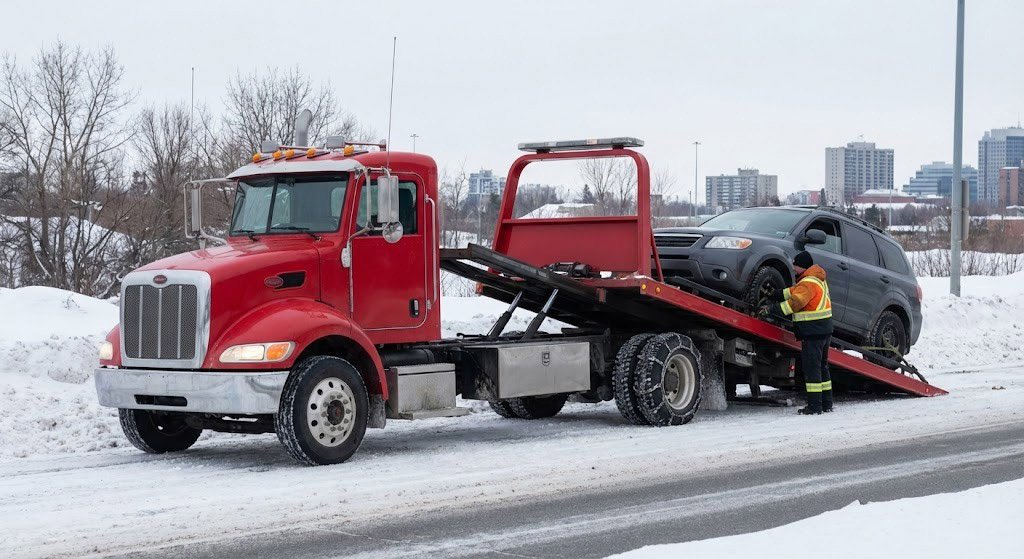
Flatbed towing is the gold standard for winter vehicle transport. Your vehicle is loaded onto a flat platform and transported with all four wheels off the ground.
Flatbed towing is safest in winter because there’s no drivetrain wear since no wheels are rolling. Cold transmission fluid isn’t circulating through a cold transmission. There’s no risk of wheel lockup from frozen brakes. Snow and ice packed in wheel wells won’t interfere with towing. Undercarriage stays protected from additional road salt exposure.
Flatbed towing is essential for all-wheel drive (AWD) and four-wheel drive (4WD) vehicles, which can suffer serious drivetrain damage if towed with wheels on the ground. It’s also required for vehicles with low ground clearance, damaged vehicles that shouldn’t roll, electric and hybrid vehicles (manufacturer requirement), and luxury vehicles where any towing damage is costly.
Wheel-Lift Towing: Conditional Winter Use
Wheel-lift towing raises either the front or rear wheels while the other set rolls on the ground. In winter, this method has significant limitations.
Wheel-lift can be used in winter for short distances on front-wheel drive or rear-wheel drive vehicles (lifting the drive wheels), when the vehicle’s transmission and drivetrain are confirmed operational, when roads are clear enough for safe wheel rolling, and for very short transports to a nearby shop.
Wheel-lift should be avoided in winter for AWD and 4WD vehicles (drivetrain damage risk), when temperatures are extremely cold (frozen components), when the vehicle has been sitting in extreme cold (seized bearings), and for long-distance tows in any condition.
Dolly Towing: Limited Winter Application
Tow dollies lift two wheels while two remain on the ground. They’re rarely the best choice for winter conditions because rolling wheels on icy roads creates control challenges, they’re difficult to use with snow and ice accumulation, and most situations that require dollies are better served by flatbed in winter.
Hook and Chain: Outdated and Dangerous
Old-style hook and chain towing drags vehicles by their frames or axles. This method is largely obsolete because it can damage vehicles. In winter, the risks are even higher due to ice causing sudden jerks and stress on attachment points. Any reputable Edmonton towing service uses modern wheel-lift or flatbed equipment instead.
How Professional Tow Truck Operators Handle Winter Conditions
Our 24/7 towing service operates safely throughout Edmonton’s winter using specialized techniques and equipment.
Winter-Equipped Trucks
Professional tow trucks operating in Edmonton winters have aggressive winter tires or chains when needed, weighted beds for improved traction, powerful winches for recovery operations, comprehensive lighting for visibility, heated components to prevent freezing, and de-icing spray for frozen mechanisms.
Trained Cold-Weather Operation
Edmonton tow truck operators learn how to assess road conditions before every movement, manage momentum on slippery surfaces, position trucks for maximum stability, handle frozen vehicle components without causing damage, and work safely in extreme cold while maintaining vehicle care.
Safety Protocols
Winter operations include enhanced safety measures such as additional warning lights and flares, extended safety zones around work areas, communication with traffic management when needed, and constant weather monitoring for changing conditions.
What to Expect When Your Vehicle Is Towed in Winter
If you need towing service during Edmonton’s winter, here’s the typical process.
Initial Assessment
When our truck arrives, the operator will first assess your vehicle’s situation including its position (on road, in ditch, parking lot), apparent damage, drivetrain type (FWD, RWD, AWD, 4WD), current condition (running, dead battery, frozen), and road and weather conditions.
Equipment Selection
Based on the assessment, the operator will determine the safest towing method. In winter, flatbed is often preferred even when wheel-lift might work in summer conditions. The extra precaution protects your vehicle from cold-weather complications.
Vehicle Preparation
Before loading, the operator may need to unlock frozen doors to put the vehicle in neutral, thaw frozen locks or latches, clear snow and ice from attachment points, test that the vehicle rolls freely (not seized), and disconnect any non-essential connections if needed.
Loading/Attachment
For flatbed loading, the bed tilts down and the vehicle is winched up carefully, with attention to icy surfaces. The operator uses proper strapping to secure the vehicle for transport, protecting it from shifting on slippery roads.
Transport
Transport speeds are adjusted for conditions. What might be a 20-minute trip in summer could take 30-40 minutes in winter to ensure safety. The operator monitors road conditions throughout.
Delivery
At your destination (home, shop, dealership), the operator carefully unloads your vehicle, ensuring it’s parked safely and you have access to it.
DIY Towing in Winter: Why You Shouldn’t
We understand the temptation to save money by having a friend with a truck tow you. In Edmonton’s winter, this is genuinely dangerous.
Risks of Amateur Winter Towing
Control loss happens when the towing vehicle loses traction on ice while pulling another vehicle, creating a dangerous situation for both vehicles and any nearby traffic. Improper attachment of tow straps to bumpers, suspension components, or other non-rated points can cause parts to tear off, especially under the jerky forces of slippery road towing. Drivetrain damage occurs because without proper knowledge of which wheels must be lifted for which drivetrain types, amateur towing can destroy transmissions and differentials. Jackknifing becomes more likely when the towed vehicle slides on ice, potentially pushing sideways into the tow vehicle or traffic.
Legal Considerations
In Alberta, improper towing can result in traffic violations, and your insurance may not cover damage caused by improper towing methods. If an accident results from amateur towing, liability issues become complex and costly.
Choosing a Winter Towing Service in Edmonton
Not all towing services are equal, especially for winter operations. Here’s what to look for.
24/7 Availability
Breakdowns don’t wait for business hours, and Edmonton’s worst weather often hits at night or on weekends. Choose a service like Edmonton Towing that operates 24/7/365.
Flatbed Capability
Ensure the service has flatbed trucks available. In winter, this is often the only appropriate option for many vehicles.
Winter Experience
Edmonton winter towing requires specific skills and equipment. Ask if their operators have winter training and if trucks are winter-equipped.
Full Service Range
The best towing services offer more than just towing. Roadside assistance including battery boost, winch out service, and tire changes means one call handles any situation.
Transparent Pricing
Reputable services provide upfront quotes before dispatch. Be wary of companies that won’t give estimates or add surprise charges.
Local Coverage
Choose a service that covers your area. Edmonton Towing serves all neighbourhoods including Downtown, Mill Woods, Westmount, Strathcona, Oliver, Glenora, and surrounding areas.
Preparing Your Vehicle for Potential Winter Towing
While you hope to never need it, a little preparation makes towing easier if the situation arises.
Know Your Drivetrain
Know whether your vehicle is front-wheel drive, rear-wheel drive, all-wheel drive, or four-wheel drive. This information is in your owner’s manual and affects which towing methods are safe.
Know Your Tow Points
Most vehicles have designated recovery/tow points, often near the front and rear bumpers. Know where yours are so you can point them out to a tow operator. Using incorrect attachment points can damage your vehicle.
Keep Locks Lubricated
Frozen door locks complicate towing. Use lock lubricant in fall to prevent freeze-ups that could delay getting your vehicle into neutral for transport.
Maintain Emergency Supplies
While waiting for a tow truck, you’ll appreciate having warm clothing, a charged phone, and other emergency supplies in your vehicle.
Special Winter Towing Situations
Accident Towing
Accident towing in winter requires extra care. Damaged vehicles may have compromised suspension or steering that makes any wheel-down towing dangerous. Flatbed transport is almost always required. Our operators are trained in accident scene safety and work with emergency responders when needed.
Heavy-Duty Winter Towing
Trucks, buses, RVs, and commercial vehicles require heavy-duty towing equipment. Winter conditions make these operations even more complex, requiring powerful trucks and experienced operators.
Long-Distance Winter Towing
Long-distance towing in winter requires careful planning around weather windows, road conditions, and mandatory rest stops. Flatbed transport is essential for protecting vehicles over extended travel distances on winter highways.
Frequently Asked Questions
Is it safe to tow my car in a blizzard?
Professional tow operators can work in severe weather, but extreme conditions may cause delays. If it’s too dangerous to safely reach you or transport your vehicle, our dispatcher will advise you on timing and safety precautions while you wait.
Will towing in cold weather damage my car?
Proper professional towing will not damage your vehicle. Flatbed towing eliminates mechanical wear concerns entirely. The risk comes from improper DIY towing or using operators without winter experience.
How much does winter towing cost compared to summer?
Winter towing prices are generally comparable to summer rates, though severe conditions or complex recoveries may cost more. Edmonton Towing provides upfront quotes regardless of season. Call (780) 652-0521 for a free estimate.
My car has been sitting in extreme cold—can it be towed?
Yes, but this is exactly why flatbed towing is preferred in winter. Vehicles that have sat in extreme cold may have seized bearings, frozen brakes, or thick fluids that make rolling the wheels problematic. Flatbed transport eliminates these concerns.
Do I need to be present when my car is towed?
You don’t need to be present, but you’ll need to arrange key access and provide authorization. Many customers have us tow from one location (like a parking lot where the car died) to their mechanic while they continue with their day.
Can you tow an AWD vehicle in winter?
Absolutely. AWD vehicles require flatbed towing to prevent drivetrain damage. This is true year-round but especially critical in winter when the added stress of cold could accelerate damage from improper towing.
Call Edmonton Towing for Safe Winter Towing Service
Edmonton’s winter is no time for shortcuts when it comes to towing. Whether you need emergency recovery from a ditch, transport to a repair shop, or your vehicle moved for any reason, professional towing protects your vehicle and keeps you safe.
Edmonton Towing provides flatbed towing, winch out recovery, and comprehensive roadside assistance 24 hours a day, 7 days a week, all winter long.
Call us at (780) 652-0521 whenever you need safe, professional towing in Edmonton. We’ll provide an upfront quote, dispatch an experienced operator, and ensure your vehicle is transported safely to your destination.
Save our number now—you’ll be glad you have it when winter strikes.