When to Call a Tow Truck: 10 Situations You Shouldn’t Ignore
Your car just made a strange noise. Or it won’t start. Or something doesn’t feel right when you’re driving. The question running through your mind: should I call a tow truck, or can I handle this myself?
It’s a decision Edmonton drivers face regularly, especially during our harsh winters. Calling a tow truck when you don’t need one wastes money. But not calling when you should can damage your vehicle, put you in danger, or turn a minor problem into a major repair bill.
This guide covers 10 situations where calling a tow truck is absolutely the right decision—and explains why attempting to drive in these circumstances is a mistake. When in doubt, Edmonton Towing is available 24 hours a day at (780) 652-0521.
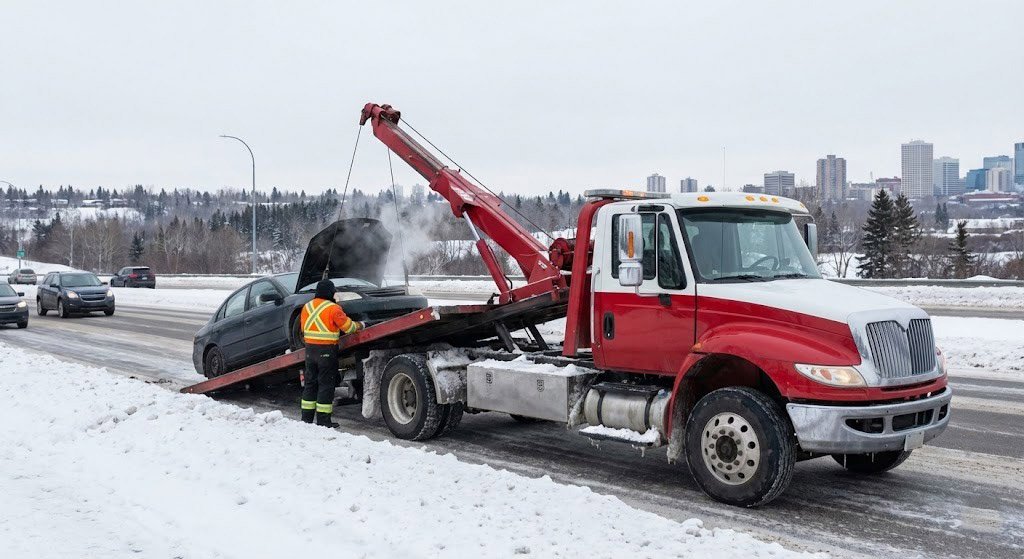
1. Your Engine Overheats
An overheating engine is one of the clearest signals to stop driving immediately. When your temperature gauge enters the red zone or the overheating warning light illuminates, continuing to drive can cause catastrophic engine damage within minutes.
Why It’s Serious
Engine overheating can warp cylinder heads, damage head gaskets, crack engine blocks, and seize internal components. These repairs cost thousands of dollars—often more than older vehicles are worth. The damage happens quickly because modern engines run at precise temperatures with tight tolerances.
What to Do
Pull over safely as soon as possible. Turn off the engine. Do not open the hood immediately—coolant and steam can cause severe burns. Wait at least 15-20 minutes before checking anything. Do not attempt to open the radiator cap on a hot engine.
Even if the engine cools and the temperature appears normal, don’t assume you can drive. The underlying problem (coolant leak, failed water pump, broken thermostat, damaged head gasket) still exists. Call for breakdown towing to a mechanic who can diagnose and repair the actual cause.
Exception
If you overheat because you’re idling in traffic on a hot day but temperature drops immediately when moving, you may have an electric fan issue that’s less urgent. However, have it checked soon—the problem will recur.
2. You Hear Grinding Brakes
Your brakes make noise for a reason. A grinding sound—metal on metal—means your brake pads are completely worn through and the backing plates are grinding against the rotors. This is a safety emergency.
Why It’s Serious
Without pad material, your braking power is severely compromised. Metal-on-metal contact damages rotors rapidly, turning a pad replacement into a complete brake system repair. Most critically, your ability to stop in an emergency is diminished. In Edmonton’s winter conditions, this can be deadly.
What to Do
If your brakes are grinding, find a safe place to stop as soon as possible. Avoid hard braking if you can—gentle, early braking is safer with compromised brakes. Once stopped, call for a tow to a brake shop. Do not attempt to drive further, even if it “seems okay.”
The Difference: Squealing vs. Grinding
Squealing brakes (a high-pitched sound) usually means pads are getting low—the wear indicators are doing their job. You have some time but should schedule service soon. Grinding (a harsh, rough sound) means pads are gone. Stop driving immediately.
3. Warning Lights Demand Attention
Modern vehicles communicate through dashboard warning lights. Some indicate minor issues; others signal stop-driving-now emergencies. Knowing the difference prevents both unnecessary panic and dangerous neglect.
Stop Immediately and Call a Tow Truck
The red oil pressure light means oil pressure has dropped to dangerous levels—engine damage can occur within seconds. Stop immediately, shut off the engine, and call for a tow.
The red temperature warning indicates overheating as discussed above. The red battery light while driving means the charging system has failed—you’re running on battery power only and will eventually stall.
Drive Carefully to Service Soon
The check engine light in steady amber usually indicates an emissions or sensor issue. Safe to drive carefully to a shop, but don’t ignore it. A flashing check engine light, however, indicates a misfire that could damage your catalytic converter—reduce speed and get to a shop promptly.
ABS, traction control, and stability control lights mean those safety systems are disabled. You can drive, but with reduced safety margin—especially concerning in Edmonton winter conditions.
When in Doubt
If multiple warning lights illuminate simultaneously, or if a warning light accompanies unusual sounds, smells, or vehicle behavior, err on the side of caution and call for roadside assistance or a tow.
4. You’ve Been in an Accident
After a collision, even one that seems minor, towing is often the safest choice. Accident towing isn’t just about immobile vehicles—it’s about hidden damage you can’t see.
Why Towing After Accidents Makes Sense
Collisions can damage structural components that aren’t visible from outside. Bent suspension or steering components may not be obvious but can cause loss of control while driving. Fluid leaks from damaged lines may not appear immediately. Airbag systems may be compromised.
Even “Minor” Accidents
Fender benders can bend structural members, damage wheel bearings, misalign suspension, or crack fluid reservoirs in ways that aren’t immediately apparent. If you drive away and a problem develops, you may be stranded in a worse location—or cause a secondary accident.
What to Do
After any accident, prioritize safety. Check for injuries and call 911 if needed. Move to safety if possible. Document the scene with photos. Exchange information with other parties. Then, unless you’re completely confident your vehicle is undamaged, call for a tow to have the vehicle professionally inspected before driving further.
Edmonton Towing provides accident towing with insurance coordination. We can transport your vehicle to your preferred body shop or a secure location while you arrange repairs.
5. You Have a Flat Tire with No Spare
A flat tire is normally a roadside assistance situation—we come change it with your spare, and you’re on your way. But many modern vehicles don’t include spare tires, only inflation kits that can’t fix sidewall damage or blowouts.
No Spare Options
If you have a flat and no usable spare, your options are limited. Driving on a flat tire—even slowly, even briefly—destroys the tire completely and often damages the wheel as well. This turns a $200 tire into a $200 tire plus a $300+ wheel.
When the “Spare” Won’t Work
Sometimes you have a spare but it won’t solve the problem. The spare is also flat (check yours periodically—they lose air over time). The spare doesn’t fit (wrong size stored, or someone swapped it previously). You have two flats. The tire damage is to the spare itself.
The Right Call
Call for flatbed towing to a tire shop. Flatbed is preferred because your vehicle won’t roll on the damaged wheel, preventing additional damage. The cost of a tow is far less than wheel replacement.
6. Your Vehicle Is Making Serious Noises
Cars communicate problems through sounds. Learning which noises demand immediate attention can save your engine, transmission, or safety.
Stop Driving Immediately For
Knocking or pounding from the engine may indicate rod knock—a bearing failure that precedes catastrophic engine destruction. Continued driving typically results in the engine seizing or throwing a rod.
Grinding from the transmission when shifting suggests internal damage. Continued operation spreads metal shavings through the system, multiplying repair costs.
Loud roaring or grinding from wheels indicates bearing failure. Complete bearing failure can cause wheel separation while driving—extremely dangerous.
Scraping or dragging sounds may indicate a brake component dragging, exhaust system hanging, or debris caught underneath. Stop and investigate before continuing.
Drive Carefully to Service For
Squealing belts suggest wear or tension issues—annoying but not immediately dangerous. Clicking when turning often indicates worn CV joints—replace soon but not emergency.
Use Judgment
If a new sound appears suddenly and seems serious, trust your instincts. Pulling over and calling for professional assessment is always better than driving until something fails completely.
7. You Smell Something Burning
Burning smells while driving always warrant attention. Different smells indicate different problems, some more urgent than others.
Burning Oil Smell
Oil leaking onto hot exhaust components creates a distinctive smell. This indicates a leak that needs repair and can potentially cause fire if oil contacts extremely hot surfaces. Pull over, check for visible leaks or smoke, and avoid driving if you see either.
Burning Rubber Smell
This often indicates a slipping belt (less urgent) or a brake caliper stuck with the brake dragging (more urgent). A dragging brake overheats, damages components, and can potentially catch fire. If accompanied by smoke from a wheel area, stop immediately.
Electrical Burning Smell
Burning plastic or electrical insulation smell suggests a wiring problem. Electrical fires can develop rapidly. If you smell burning electrical components, pull over immediately, turn off the ignition, and exit the vehicle. Do not restart without professional inspection.
Sweet Smell
A sweet smell indicates coolant leak, probably onto the heater core. While not immediately dangerous, it indicates a cooling system problem that will lead to overheating.
General Rule
Burning smells combined with smoke always mean stop immediately. Any burning smell that intensifies while driving is a signal to stop and investigate.
8. You’ve Run Out of Fuel (or Put in Wrong Fuel)
Running out of fuel is embarrassing but not dangerous—unless you’re in a dangerous location when it happens. Wrong fuel, however, is a potential engine-killing mistake.
Out of Fuel
If you run out of gas, don’t try to coast to a station—pull safely off the road as soon as the engine dies. Walking to a gas station isn’t always safe or practical, especially in Edmonton winters. Call for fuel delivery service—we’ll bring enough fuel to get you to a station.
Wrong Fuel
Putting gasoline in a diesel vehicle (or vice versa) causes serious problems. Gasoline in a diesel can damage the fuel pump, injectors, and engine. Diesel in a gasoline vehicle may not run at all and can damage the fuel system and catalytic converter.
If you realize the mistake before starting the engine, do not start it. Call for a tow to a shop that can drain the tank. If you’ve already driven, stop as soon as possible and call for a tow. The less contaminated fuel runs through the system, the less damage occurs.
9. Your Vehicle Is Stuck and Self-Recovery Failed
Getting stuck in snow, mud, or a ditch is common in Edmonton—especially during winter. Sometimes you can rock out or get a push. Sometimes you need professional winch out service.
When to Stop Trying
Call for professional recovery when your wheels spin without gaining traction for more than a few minutes. You’ve been trying for 10-15 minutes without progress. Your vehicle is tilted, in a ditch, or in an unstable position. You’re high-centered (frame resting on snow or ground). You smell burning from spinning tires or straining transmission.
Risks of Over-Trying
Continued spinning digs you deeper. Aggressive attempts can overheat your transmission. Spinning wheels wear through tire tread rapidly. Getting unstuck then getting immediately stuck again (because you’re in a bad location) wastes time and money. In extreme cold, extended time outside trying to self-recover risks frostbite.
What Professional Recovery Offers
Tow trucks have winches that provide pulling power your vehicle can’t generate. Operators know how to attach to proper recovery points without damaging your vehicle. They can recover vehicles from positions that are impossible to self-extract from. A 30-minute professional recovery beats hours of frustrating, potentially damaging attempts.
10. You Just Don’t Feel Safe Driving
Sometimes the decision to call a tow truck isn’t about a specific symptom—it’s about a combination of factors that add up to “something isn’t right.”
Trust Your Instincts
The vehicle handles differently than normal. You heard or felt something, even if you can’t identify what. The car hesitated, lurched, or behaved oddly. You’re in an unfamiliar area with no cell service and a potential problem. Weather conditions combined with vehicle concerns make you uncomfortable.
Why It Matters
Your instincts as a driver are worth listening to. You know how your car normally feels and sounds. When something seems wrong—even if you can’t articulate exactly what—your subconscious may be processing warning signs your conscious mind hasn’t identified yet.
The Cost-Benefit Analysis
A tow costs $150-300 in most situations. A breakdown in a dangerous location, damage from continued driving, or an accident caused by vehicle failure costs far more—in money, time, and potentially health. When the cost of being wrong about driving is high, the cost of a precautionary tow is cheap insurance.
What to Do When You Call for a Tow
When you decide to call, having the right information ready speeds up service.
Information to Provide
Know your exact location (address, intersection, highway mile marker). Provide your vehicle information (make, model, color, license plate). Describe the problem (what happened, what you observed). Mention any special circumstances (in traffic, blocking a lane, in a dangerous location).
While Waiting
Stay safe—if on a roadside, stay in your vehicle or well away from traffic. Keep hazard lights on. In extreme weather, run the engine periodically for heat (ensuring exhaust is clear). Keep your phone charged to communicate with the tow company.
What to Expect
Edmonton Towing provides upfront pricing quotes before dispatch. We’ll give you an ETA and can provide updates. Our operators will assess your vehicle and recommend the appropriate service—whether that’s roadside assistance that gets you driving again or towing to a shop for repairs.
Edmonton Towing Services for Every Situation
Whatever situation you’re facing, Edmonton Towing has the equipment and expertise to help.
Flatbed towing safely transports vehicles that shouldn’t roll—AWD vehicles, damaged vehicles, or any situation where wheel-down towing isn’t appropriate. Breakdown towing gets disabled vehicles to repair shops. Accident towing handles collision recovery with insurance coordination. Winch out service recovers stuck vehicles from snow, mud, and ditches. Heavy-duty towing handles trucks, buses, RVs, and commercial vehicles.
We serve all Edmonton neighbourhoods including Downtown, Mill Woods, Strathcona, Westmount, Glenora, Oliver, Highlands, Capilano, Bonnie Doon, Belgravia, and the entire greater Edmonton area.
Frequently Asked Questions
How much does a tow truck cost in Edmonton?
Towing costs depend on distance, vehicle type, and service needed. Basic local towing typically starts around $100-150. Edmonton Towing provides upfront quotes before dispatch—call (780) 652-0521 for a free estimate.
How long will I wait for a tow truck?
In normal conditions, Edmonton Towing typically arrives within 30 minutes for most city locations. Severe weather or high-demand periods may extend wait times slightly.
Should I call a tow truck or roadside assistance?
Roadside assistance handles minor issues that can be fixed on-site (dead battery, flat tire, lockout, out of fuel). Towing is needed when the vehicle can’t be driven safely or needs shop repair. If you’re unsure, call us—we’ll help determine the right service.
Can I stay with my vehicle during the tow?
In most cases, yes—you can ride in the tow truck cab to your destination. Let the dispatcher know when you call if you need transportation.
What if I’m not sure whether I need a tow?
Call and describe your situation. Our dispatchers can help assess whether you need a tow, roadside assistance, or might be able to safely drive. There’s no charge for asking.
When In Doubt, Call It Out
The situations in this guide are clear cases where towing is the right choice. But many real-world situations aren’t as clear-cut. When you’re uncertain, remember: the cost of an unnecessary tow is small compared to the cost of engine damage, transmission failure, accidents, or getting stranded in dangerous conditions.
Save Edmonton Towing’s number in your phone: (780) 652-0521. We’re available 24 hours a day, 7 days a week, including holidays and during severe weather. When you need help, we’re here.
Drive safe, Edmonton—and know when it’s smarter not to drive at all.