
Winter Car Battery Problems in Edmonton: Complete Guide
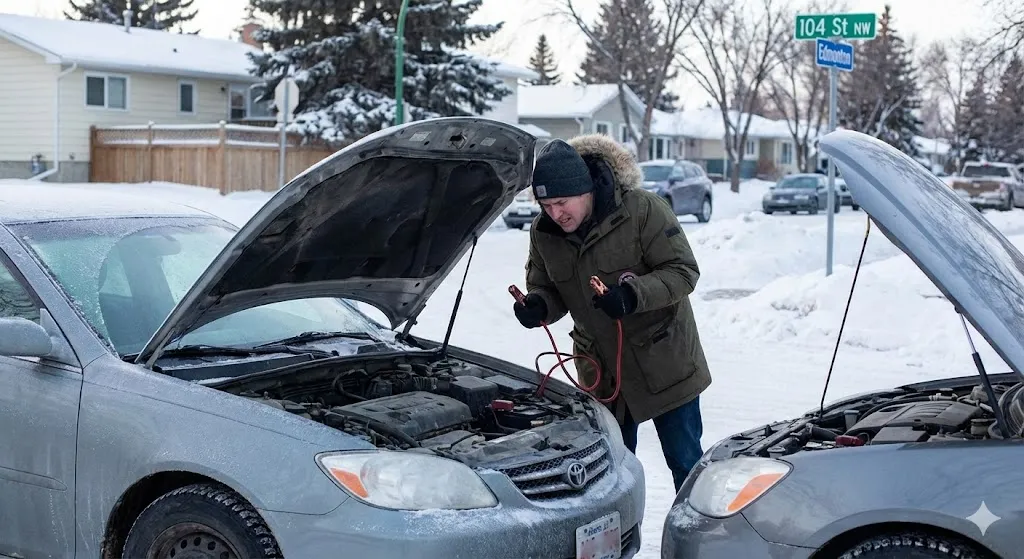
Edmonton winters are brutal on car batteries. When temperatures plunge to -30°C or below, your battery loses up to 60% of its starting power while your engine demands twice as much energy to turn over. If you’ve ever been stranded in a frozen parking lot with nothing but clicking sounds from your ignition, you know how quickly a dead battery can ruin your day. This guide explains why batteries fail in Edmonton’s cold, how to spot warning signs before you’re stranded, and what to do when your car won’t start.
Why Car Batteries Die in Edmonton Winter
Car batteries rely on chemical reactions to generate electrical power. Inside every battery, lead plates sit in an electrolyte solution that facilitates energy transfer. When temperatures drop, these chemical reactions slow dramatically—the molecules move sluggishly, producing less power just when your engine needs more to overcome cold, thick oil and stiff mechanical parts.
At -18°C, a fully charged battery loses about 40% of its strength. By the time Edmonton hits -30°C or colder, that same battery is operating at barely 40% capacity. Meanwhile, your engine requires almost double the normal power to start. This mismatch between reduced battery output and increased engine demand is why so many Edmonton drivers need emergency battery boost service during cold snaps.
Older batteries suffer even more. If your battery is over three years old, the internal plates have already degraded from normal use. Add Edmonton’s extreme cold, and a marginal battery that worked fine in September becomes completely dead by January.
Warning Signs Your Battery Won’t Survive Winter
Slow Engine Crank
The most obvious sign of battery trouble is a sluggish engine start. If you turn the key and hear slow, labored cranking instead of the usual quick turnover, your battery is struggling. This often happens on the first cold morning of the season—your battery worked fine yesterday at -5°C but can’t handle -25°C today. Don’t ignore this warning. If your engine cranks slowly, your battery is on borrowed time and will likely fail completely within days.
Dim or Flickering Lights
Your headlights, dashboard lights, and interior dome lights all draw power from your battery. If they appear dimmer than normal, especially when you first turn on your car or while idling, your battery isn’t holding a proper charge. Flickering lights are even worse—this usually means your battery or charging system is failing. In Edmonton winter, dim lights at night aren’t just inconvenient; they’re dangerous and signal imminent battery failure.
Dashboard Warning Lights
Most modern vehicles have a battery warning light on the dashboard—it looks like a small battery symbol or shows as a red icon. If this light stays on after you start your engine, your charging system isn’t working correctly. This could mean a failing battery, a bad alternator, or corroded connections. Don’t ignore dashboard warnings. In cold weather, a marginal charging system will leave you stranded fast.
Clicking Sound When Starting
If you turn the key and hear rapid clicking instead of the engine turning over, your battery is too weak to engage the starter motor. This is the classic sound of a dead or nearly dead battery. In Edmonton winter, this often happens suddenly—your car worked yesterday, but overnight cold drained the last bit of usable power. When you hear clicking, you need professional help. Call (780) 652-0521 for immediate battery boost service.
Corroded Battery Terminals
Pop your hood and look at your battery terminals—the metal posts where cables connect. If you see white, blue, or greenish crusty buildup, that’s corrosion. Corroded terminals create electrical resistance, reducing the power flowing between your battery and engine. In mild weather, corroded terminals might cause minor issues. In Edmonton’s cold, they can prevent your car from starting entirely. Clean terminals are essential for winter reliability.
Swollen or Bloated Battery Case
Batteries contain liquid electrolyte that can freeze in extreme cold. When this happens, the battery case swells or bulges. If your battery looks swollen or misshapen, it’s been damaged by freezing and needs immediate replacement. A frozen battery is dangerous—it can crack, leak acid, or even explode. Never attempt to jump-start or charge a visibly swollen battery. Replace it immediately.
Battery Age Over Three Years
Most car batteries last three to five years, but Edmonton’s temperature extremes—scorching summers and arctic winters—shorten battery life significantly. If your battery is over three years old, have it tested before winter arrives. A battery that passes testing in October might still fail in January when temperatures drop. Don’t wait for cold weather to discover your battery is too old to survive winter.
How to Prevent Winter Battery Failure
Park Indoors Whenever Possible
The single best way to protect your battery is keeping it warm. Parking in a heated garage or even an unheated parkade makes a massive difference. A battery at -5°C performs far better than one at -35°C. If you have access to indoor parking at home or work, use it. Your battery will start easier, last longer, and give you fewer problems throughout winter.
Use a Battery Blanket or Block Heater
If indoor parking isn’t available, invest in a battery blanket or engine block heater. Battery blankets wrap around your battery and plug into a standard outlet, keeping the battery above freezing overnight. Block heaters warm your engine oil and surrounding components, reducing the power needed to start your car. Both devices significantly improve cold-weather starting and extend battery life. Many Edmonton drivers use timers to run heaters for 2-3 hours before starting their morning commute.
Keep Your Battery Fully Charged
A fully charged battery resists freezing much better than a partially discharged one. The electrolyte in a fully charged battery has a lower freezing point—around -57°C compared to -10°C for a discharged battery. Keep your battery charged by driving at least 20-30 minutes several times per week. Short trips around the neighborhood don’t fully recharge your battery after cold starts. If you only drive short distances, consider using a trickle charger once weekly to maintain full charge.
Clean Battery Terminals Regularly
Corroded terminals create electrical resistance that weakens starting power. Before winter arrives, clean your battery terminals with a wire brush and baking soda solution. Remove cables, scrub away corrosion, rinse with water, dry thoroughly, and reconnect tightly. Apply a thin layer of petroleum jelly or dielectric grease to prevent future corrosion. Clean connections ensure maximum power transfer from battery to starter.
Test Your Battery Before Winter
Don’t wait until the first cold snap to discover your battery is weak. Most auto parts stores and mechanics offer free battery testing. A load test measures your battery’s actual capacity under realistic conditions. If your battery tests marginal in autumn, replace it before winter. A new battery costs far less than being stranded in -30°C weather or paying for emergency service calls.
Limit Electrical Accessories in Cold Weather
When starting your car in extreme cold, turn off all accessories—radio, heater blower, headlights, heated seats, and rear defrost. These devices draw significant power, making it harder for your battery to start the engine. Start your car first, let it idle for 30-60 seconds, then turn on accessories. This simple habit reduces strain on cold batteries and prevents starting failures.
Replace Old Batteries Before Winter
If your battery is over four years old or showed any weakness last winter, replace it before cold weather returns. Don’t gamble on an aging battery making it through another Edmonton winter. New batteries have full capacity and handle cold far better than old ones. Replacing your battery in October is far more convenient and cheaper than emergency service at 6 AM on the coldest morning of the year.
What to Do When Your Battery Dies in Winter
Don’t Keep Trying to Start
If your engine won’t start after two or three attempts, stop immediately. Repeatedly cranking a dead battery drains it further, damages the starter motor, and can flood your engine. If your car won’t start, it won’t start. Continuing to try only makes the situation worse and increases repair costs.
Call Professional Battery Boost Service
While a neighbor might offer jumper cables, professional boost service is safer and more effective in extreme cold. Our commercial-grade jump starters deliver higher amperage than standard cables, working reliably even at -40°C. We also test your battery after boosting to determine if it will hold a charge or needs replacement. Call (780) 652-0521 for professional battery boost service anywhere in Edmonton.
If Boosting Doesn’t Work
Sometimes a battery is too dead or damaged to accept a boost. If your battery won’t respond to professional boosting, you need breakdown towing to a repair facility. We’ll transport your vehicle to your preferred mechanic or dealership where they can properly diagnose the problem—whether it’s a dead battery, failed alternator, or other electrical issue.
Battery Boost vs. Towing: Which Do You Need?
If your engine turns over slowly or you hear clicking sounds, a professional boost will usually get you running. However, if your battery is frozen solid, visibly damaged, or over five years old, boosting may only provide temporary help. When you call (780) 652-0521, our operators will ask questions to determine whether you need a quick boost or should proceed directly to towing for battery replacement.
In many cases, we’ll attempt a boost first. If your battery won’t hold a charge after boosting, we’ll apply the boost service cost toward your tow to a repair shop. This approach saves you time and gets you the right solution quickly.
Emergency Battery Service Across Edmonton
Our commercial battery boost service operates 24/7 throughout Edmonton and surrounding areas. Whether you’re stranded in Downtown Edmonton, Mill Woods, West Edmonton, or any neighborhood, we dispatch the nearest available service vehicle immediately.
Our technicians carry commercial-grade boosters rated for extreme cold, battery testing equipment, and can often diagnose charging system problems on-site. Average response time is 20-30 minutes in most areas. We also provide complete roadside assistance including tire changes, lockouts, and fuel delivery—everything you need to handle winter emergencies.
Frequently Asked Questions
How cold does it need to be for a car battery to die?
Battery capacity drops significantly below -15°C and becomes critical below -25°C. A healthy, fully charged battery should start your car down to -35°C or colder. However, a battery that’s over three years old, partially discharged, or has corroded connections may fail at -20°C or warmer. Edmonton’s coldest days—when temperatures hit -35°C to -40°C—cause the highest number of battery failures across the city.
Can I jump-start my own car with cables?
Yes, if you have proper jumper cables and another vehicle with a good battery. However, jump-starting in extreme cold requires careful technique—incorrect connections can damage modern vehicle electronics, and frozen batteries can be dangerous. Professional boost service is safer, more effective, and includes battery testing. Our commercial boosters work reliably even when standard cables fail in extreme cold.
How long does a battery boost take?
The actual boost takes only 5-10 minutes once our technician arrives. Total time from your call to driving away is typically 30-40 minutes including dispatch and travel time. We also test your battery after boosting to confirm it will hold a charge and advise whether you need immediate battery replacement.
Will my battery charge while driving after a boost?
If your battery is healthy and your alternator works correctly, yes—driving for 30-45 minutes should recharge your battery after a boost. However, if your battery is old or damaged, it may not hold a charge. We recommend driving directly to an auto parts store or mechanic for battery testing after receiving a boost, especially if you’ve needed multiple boosts recently.
How much does battery boost service cost in Edmonton?
Professional battery boost service starts at $99 depending on your location and time of day. This includes dispatch, commercial-grade boosting equipment, and basic battery testing. After-hours service may include a small additional fee. We provide upfront pricing before dispatch with no hidden charges. If boosting doesn’t work and you need towing, we apply the boost cost toward your tow.
Should I replace my battery or just keep boosting it?
If you’ve needed more than two boosts in a single winter, your battery is failing and should be replaced. Repeated boosting indicates your battery can no longer hold a charge—a problem that only gets worse. Replacing a marginal battery costs less than multiple service calls and prevents being stranded repeatedly throughout winter.
Can extremely cold weather permanently damage my battery?
Yes. If a discharged battery freezes, the expanding ice can crack internal plates and the battery case. Once frozen and damaged, the battery must be replaced—it cannot be repaired or recharged. This is why maintaining a full charge throughout winter is critical. A fully charged battery resists freezing down to -57°C, while a discharged battery can freeze at -10°C.
Do electric vehicles have battery problems in Edmonton winter?
Yes, but differently than gas vehicles. EVs have both a 12-volt accessory battery (similar to gas cars) and a large traction battery. Cold weather reduces EV driving range and affects the 12-volt battery that powers accessories. If your EV won’t start, the 12-volt battery likely needs boosting. We provide battery boost service for all vehicle types including electric vehicles. For towing, EVs require flatbed service to prevent drivetrain damage.
Don’t Get Stranded This Winter
Edmonton winters are unforgiving, and battery failures happen fast when temperatures drop. Whether you need emergency battery boost service right now or want to schedule preventive maintenance, we’re here to help. Our 24/7 emergency service responds quickly across all Edmonton neighborhoods including Strathcona, Oliver, Glenora, and beyond.
Call (780) 652-0521 now for immediate dispatch. We’ll get your car started and back on the road fast, or provide safe towing to a repair facility if needed. Don’t let a dead battery leave you stranded in Edmonton’s brutal winter cold—help is just one phone call away.