Flatbed vs Wheel-Lift Towing: Which Is Right for Your Vehicle?
🚛 Quick Answer
Flatbed towing and wheel-lift towing are the two main methods for transporting vehicles in Edmonton, each with distinct advantages. Flatbed towing is safer for luxury cars, lowered vehicles, and all-wheel drive models, while wheel-lift towing is more cost-effective for standard vehicles with functioning wheels. The choice depends on your vehicle type, condition, and specific situation.
If you’re stranded on the side of a road in Edmonton with a disabled vehicle, one of the first decisions your 24-hour towing service will discuss is which towing method to use. The two primary options—flatbed and wheel-lift—each offer distinct benefits and limitations. Understanding these differences helps you make an informed choice that protects your vehicle and manages your towing costs effectively.
In Edmonton, where winter conditions and varied road terrain present unique challenges, selecting the right towing method is essential. Whether your car has suffered a mechanical failure, you’ve been in an accident, or you’re transporting a vehicle long distance, knowing when to request a flatbed tow versus accepting wheel-lift towing can prevent costly damage and ensure safe transport.
What Is Flatbed Towing?
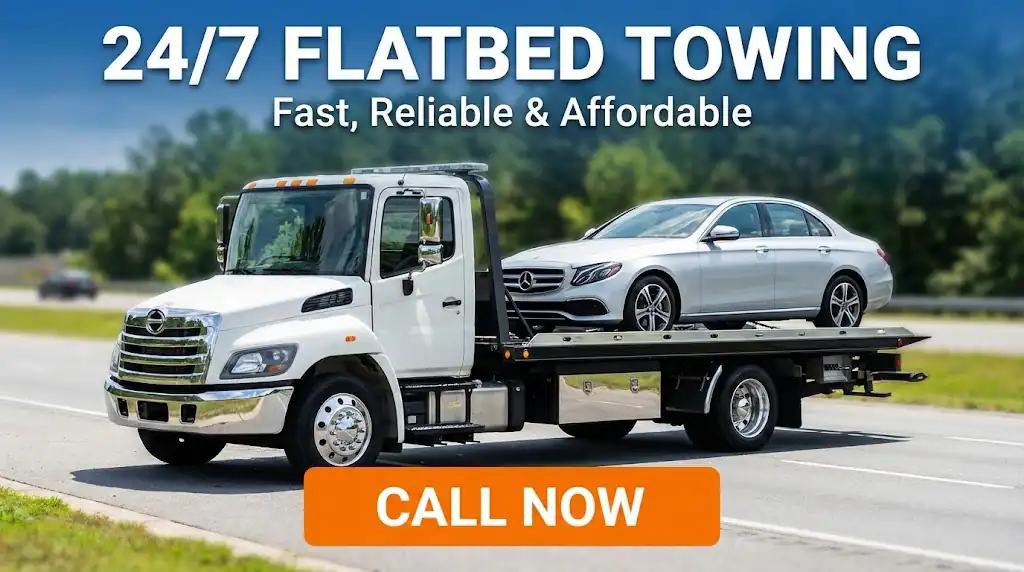
Flatbed towing is a method where the entire vehicle is loaded onto a completely flat, level platform and secured with chains, straps, and wheel locks. The vehicle’s wheels do not touch the ground during transport, eliminating any rolling resistance or directional forces on the tires, suspension, or drivetrain. This is the gentlest and most protective towing method available.
A flatbed tow truck features a hydraulic lift system that raises the platform at a controlled angle, allowing the vehicle to slide or be winched onto the bed. Once positioned, the vehicle is secured using multiple attachment points. The operator ensures equal weight distribution to maintain stable transport, which is particularly important in Edmonton’s variable weather conditions.
The cost of a flatbed towing service is typically higher than wheel-lift alternatives because the equipment is more sophisticated and requires greater skill to operate safely. However, many vehicle owners consider this investment worthwhile for the peace of mind and protection it provides.
Key Features of Flatbed Towing
- Vehicle is lifted completely off the ground
- No weight on tires or suspension during transport
- 360-degree protection from road debris
- Ideal for damaged or inoperable vehicles
- Better handling in winter and wet conditions
- Prevents additional mechanical stress
What Is Wheel-Lift Towing?
Wheel-lift towing uses a different approach: the towing vehicle approaches from behind and uses a hydraulic arm with wheel-lift attachments to raise either the front or rear wheels of the disabled vehicle approximately 12 inches off the ground. The remaining two wheels stay in contact with the road surface, and the vehicle’s weight sits on those wheels and the tow truck’s suspension.
This method is often called a “hook and chain” tow, though modern wheel-lift towing uses automatic wheel-lifts rather than chains. Wheel-lift towing is faster to deploy, requires less skill, and is more economical to operate—which translates to lower towing rates for customers in many situations.
The trade-off is that wheel-lift towing places stress on the vehicle being towed, particularly the suspension, steering, and transmission. For vehicles with low clearance, luxury suspensions, or all-wheel drive systems, wheel-lift towing can actually cause significant damage during the towing process.
Key Features of Wheel-Lift Towing
- Front or rear wheels lifted while two wheels remain on the road
- Faster setup and deployment
- More affordable towing option
- Works well for standard sedans and trucks
- Places weight on suspended wheels and steering
- Risk of suspension and transmission damage
Flatbed vs Wheel-Lift Towing: Key Differences
The fundamental difference between these methods lies in weight distribution and vehicle contact with the road surface. Let’s explore the key distinctions that matter when you need flatbed tow services versus standard wheel-lift assistance:
Wheel-Lift Towing
- Two wheels on road
- Suspension fully engaged
- Faster setup time
- Lower cost
- Potential damage risk
- Best for standard vehicles
Flatbed Towing
- All wheels off road
- No suspension stress
- Longer setup required
- Higher cost
- Maximum protection
- Safe for all vehicles
When to Choose Flatbed Towing
A flatbed tow is the safer choice in numerous situations. Understanding when to specifically request a flatbed towing service protects both your vehicle and your wallet in the long run by preventing additional damage during transport.
Scenarios Where Flatbed Towing Is Essential
All-Wheel Drive (AWD) Vehicles. AWD cars suffer serious transmission and differential damage when any wheels roll while others are stationary. Always request flatbed towing for AWD vehicles in Edmonton.
Low-Clearance and Lowered Vehicles. Sports cars, lowered sedans, and vehicles with custom suspensions can be damaged by the wheel-lift’s aggressive angle. Flatbed towing maintains proper clearance and protects the undercarriage.
Luxury and High-Value Vehicles. BMW, Audi, Mercedes, and similar luxury vehicles have sophisticated suspensions that can be damaged by wheel-lift towing. A flatbed tow provides the protection these vehicles deserve.
Vehicles with Damaged or Non-Functioning Wheels. If your wheels are damaged, blown out, or the steering is compromised, wheel-lift towing is impossible. Flatbed towing is your only safe option.
Accident and Collision Damage. After a collision, your suspension, steering, and frame alignment may be compromised. Flatbed towing prevents additional damage during transport to the repair facility.
Electric and Hybrid Vehicles. EVs and hybrids have unique battery and powertrain configurations. Most manufacturers recommend flatbed towing to avoid electrical or mechanical complications during transport.
💡 Pro Tip: When in Doubt, Request Flatbed
If you’re unsure whether your vehicle requires a flatbed tow, call your Edmonton towing provider and describe your vehicle’s make, model, and condition. Professional operators can advise whether flatbed towing is necessary for your specific situation.
When Wheel-Lift Towing Works Best
Wheel-lift towing is appropriate and economical for many situations. Knowing when wheel-lift towing is safe helps you make cost-conscious choices while still protecting your vehicle adequately.
Ideal Conditions for Wheel-Lift Towing
- Standard Sedans: Honda Civic, Toyota Corolla, Ford Focus, and similar basic sedans are well-suited for wheel-lift towing with minimal risk.
- Pickup Trucks: Most pickup trucks have durable suspensions designed to handle the stress of wheel-lift towing.
- Vehicles with Functioning Wheels: If all four wheels are intact and the steering system is operational, wheel-lift towing is viable.
- Front-Wheel Drive Cars: When the rear wheels are lifted, front-wheel drive vehicles typically handle towing stress well.
- Short-Distance Towing: Moving a vehicle a short distance (under 20 miles) with wheel-lift towing poses less cumulative stress.
- Budget-Conscious Situations: When cost is the primary concern and the vehicle meets safety criteria, wheel-lift towing is economical.
⚠️ Transmission Risk with Wheel-Lift
Even if your vehicle seems suitable for wheel-lift towing, there’s always a risk if the transmission is in drive or neutral while being towed. Ensure your vehicle is in neutral and the steering wheel is unlocked to minimize stress on the transmission and steering systems.
Cost Comparison: Flatbed vs Wheel-Lift Towing
Understanding the cost difference between flatbed and wheel-lift towing helps you budget for emergency services and make informed decisions. Flatbed towing rates vary based on distance, time of day, and local demand, but here’s what you can typically expect in Edmonton:
Need Professional Towing? Call 24/7
Flatbed & wheel-lift towing across all Edmonton neighborhoods
While a flatbed tow costs more upfront, consider the potential repair costs if wheel-lift towing damages your transmission, suspension, or frame. For high-value vehicles, the extra expense of flatbed towing is excellent insurance against costly repairs.
Which Vehicles Need Flatbed Towing?
Certain vehicle types should almost always be towed using a flatbed method. Understanding your vehicle’s characteristics helps you determine whether a flatbed tow is necessary.
Vehicle Categories Requiring Flatbed Towing
All-Wheel Drive (AWD) Vehicles: This is the most critical category. AWD systems have linked front and rear axles that rotate in unison. When a wheel-lift tow raises two wheels, the other two wheels rotate at a different speed, potentially causing internal transmission damage. AWD Subarus, Audis, and Acuras should always use flatbed towing.
Luxury Vehicles: Premium cars like BMW, Mercedes-Benz, Audi, and Porsche feature advanced suspension systems with air springs, adaptive damping, and electronic controls. Wheel-lift towing can damage these sophisticated systems. Flatbed towing protects your investment.
Lowered and Modified Vehicles: Cars with lowered suspensions, custom modifications, or performance upgrades often have compromised clearance. Wheel-lift towing can drag the undercarriage, causing damage. Flatbed towing ensures your customizations are protected during transport.
Sports and Performance Cars: High-performance vehicles like Camaros, Mustangs, Challengers, and Corvettes have specialized suspension and braking systems that don’t tolerate wheel-lift stress. Use flatbed towing exclusively.
Electric Vehicles (EVs): Tesla, Kia EV6, Chevrolet Bolt, and other EVs have unique powertrains that manufacturers recommend be transported via flatbed only. Rolling wheels with an EV in neutral can engage regenerative braking and cause electrical issues.
Hybrid Vehicles: Honda Hybrid, Toyota Prius, and similar hybrids have complex powertrain interactions. Flatbed towing eliminates the risk of electrical or mechanical complications.
How the Flatbed Towing Process Works
Understanding the flatbed towing process helps you know what to expect when you call for flatbed towing service in Edmonton. Here’s how professional operators safely load and transport your vehicle:
Arrival and Assessment. The tow truck operator arrives at your location and immediately assesses your vehicle’s condition, checking for damage, flat tires, and mechanical issues that might affect towing safety.
Platform Positioning. The operator positions the flatbed truck parallel or at an appropriate angle to your vehicle. The hydraulic platform is lowered gradually to ground level or a shallow angle.
Loading Method Selection. Depending on your vehicle’s condition, the operator either drives it onto the platform (if functional) or winches it on (if immobilized). The winch approach is gentler and preferred for damaged vehicles.
Secure Fastening. Once loaded, the operator secures your vehicle with chains, straps, and wheel locks at multiple points. The vehicle is positioned for balanced weight distribution across the flatbed.
Transport and Arrival. The tow truck driver carefully transports your vehicle to the destination (repair shop, dealership, your home). The flatbed design ensures smooth transport with minimal vibration or stress.
Careful Unloading. At the destination, the operator carefully lowers the flatbed platform and unloads your vehicle. The same care used during loading ensures your vehicle is set down gently without damage.
Edmonton-Specific Towing Considerations
Edmonton’s climate and geography present unique challenges for towing operations. According to Alberta Transportation, winter road conditions significantly affect vehicle recovery operations. Understanding these local factors helps you appreciate why choosing the right towing method is especially important in Alberta.
Winter and Weather Challenges
Edmonton experiences harsh winters with temperatures dropping below -30°C. Snow, ice, and road salt create hazardous conditions for both towing trucks and vehicles being transported. Flatbed towing is particularly advantageous in winter because the elevated vehicle avoids road spray, salt exposure, and friction with potentially icy roads. Wheel-lift towing in icy conditions risks losing traction and control if the lifted wheels begin to slip.
Additionally, metal contracts in extreme cold. Wheel-lift attachments can become rigid and unforgiving. Flatbed towing eliminates these mechanical stresses entirely, making it the safer choice during Edmonton’s brutal winters.
Road Surface Variations
Edmonton’s roads vary from smooth highway surfaces to rough downtown streets and construction zones. Winter potholes and uneven pavement can jar vehicles being towed via wheel-lift. Flatbed towing provides superior suspension isolation, protecting your vehicle’s alignment and undercarriage from damage caused by poor road conditions.
Service Area Accessibility
Edmonton spans a large geographic area across downtown, Strathcona, Mill Woods, and surrounding neighborhoods. Flatbed trucks have excellent maneuverability even in tight urban spaces, making them the preferred choice for downtown or residential areas where access is limited. Wheel-lift towing requires more space to position the truck correctly.
Insurance and Liability Considerations
Your vehicle insurance policy may influence which towing method is appropriate. Some insurance policies require flatbed towing for newer or high-value vehicles, while others cover both methods. The Canadian Automobile Association (CAA) recommends flatbed towing for most modern vehicles. Always check your policy or contact your insurer to determine coverage requirements.
If you’re in an accident, your insurance company may demand flatbed towing to protect their interests in your vehicle. Professional towing companies understand these requirements and can advise which method your insurance likely requires.
For roadside assistance situations like breakdown towing or battery boosts, wheel-lift towing is often acceptable and less costly. However, accident towing almost always requires flatbed to protect the damaged vehicle.
Flatbed Towing for Long-Distance Transport
If you need long-distance vehicle transport from Edmonton to Calgary, Fort McMurray, or beyond, flatbed towing becomes even more critical. The extended duration of transport amplifies any damage risks from wheel-lift towing. A flatbed tow provides the protection your vehicle deserves over hundreds of miles.
Long-distance flatbed towing costs more, but the protection and peace of mind are invaluable. Your vehicle arrives in the same condition it left, without additional mechanical stress or wear.
Frequently Asked Questions
Is my car suitable for wheel-lift towing?
If your vehicle is a standard sedan or pickup truck, has functioning wheels and steering, and isn’t an AWD model, it’s likely suitable for wheel-lift towing. However, when in doubt, choose flatbed towing to be safe. Call our operators at (780) 652-0521 to discuss your specific vehicle.
Can my AWD vehicle be towed with a wheel-lift?
No. AWD vehicles should never be towed with wheel-lift method. The mismatched rotation between lifted and rolling wheels can cause catastrophic transmission damage. Always request flatbed towing for AWD vehicles.
How much does flatbed towing cost in Edmonton?
Local flatbed towing typically costs $120-$250 for short distances, with rates increasing based on mileage ($3-$6 per mile). After-hours services include a $50-$100 surcharge. Contact us for a specific quote based on your location and destination.
What if my vehicle has a flat tire? Can it still be towed?
If you have a flat tire, wheel-lift towing is not possible. Flatbed towing is your only option, as it doesn’t require your vehicle to have operational wheels. We can tow safely regardless of your tire condition.
Is flatbed towing safe for my luxury car?
Yes. Flatbed towing is the safest option for luxury vehicles like BMW, Mercedes, and Audi. It eliminates stress on sophisticated suspension systems and protects your investment. We recommend flatbed towing for any vehicle valued over $30,000.
Can I request flatbed towing specifically when I call for help?
Absolutely. When you call (780) 652-0521, you can request flatbed towing. Tell our operators your vehicle make and model, and they’ll provide a quote and ensure the appropriate equipment is dispatched.
How long does a flatbed tow take compared to wheel-lift?
Flatbed towing takes longer—typically 20-30 minutes for loading, versus 10-15 minutes for wheel-lift. The extra time ensures safe, secure fastening of your vehicle. The protection is worth the wait.
Will flatbed towing damage my undercarriage?
No. Flatbed towing lifts your vehicle completely off the ground, so the undercarriage doesn’t touch anything. This is one of the primary advantages—zero risk of undercarriage damage from road contact or debris.
Does my insurance cover flatbed towing?
Most comprehensive insurance plans cover towing, though specifics vary. Check your policy to see if flatbed towing is covered or if a higher deductible applies. We can help coordinate with your insurer—just let us know when you call.
What vehicles require flatbed towing in Edmonton?
AWD vehicles, luxury cars, lowered vehicles, sports cars, and electric vehicles should always use flatbed towing. Additionally, any vehicle with damaged wheels, steering issues, or involved in an accident should be transported via flatbed. When unsure, it’s better to choose flatbed.
Professional Towing Service
Available 24/7 across all Edmonton neighborhoods • Flatbed & standard towing
Making the Right Choice for Your Vehicle
Choosing between flatbed and wheel-lift towing ultimately depends on your vehicle’s characteristics, the situation, and your priorities. When you’re stranded in Edmonton and need immediate assistance, you can rely on professional towing operators to help guide your decision.
The safest approach is simple: if there’s any doubt about whether your vehicle should be transported with a flatbed tow versus wheel-lift, choose flatbed. The extra cost provides insurance against potential mechanical damage. Your vehicle’s transmission, suspension, and frame are expensive to repair—protecting them is a worthwhile investment.
For all towing situations in Edmonton, from motorcycles to heavy trucks, roadside assistance to major accident recovery, professional towing companies have the expertise and equipment to recommend the best towing method for your specific needs.
Don’t hesitate to call and ask questions about flatbed towing versus wheel-lift options. Your towing operator’s advice is based on years of experience and professional standards. They’re committed to getting your vehicle to its destination safely and securely, whether you need a quick local tow or an extended long-distance haul across Alberta.