
How to Boost a Car Battery: Step-by-Step Edmonton Guide
🔋 Quick Answer
Need to boost a car battery? Turn off both vehicles, connect red cable to dead battery positive (+), then good battery positive (+). Connect black cable to good battery negative (-), then to unpainted metal on the dead car. Start the helper vehicle, wait 2-3 minutes, then start your car. Cost: $75–$150 for professional service. Most takes 15–30 minutes.
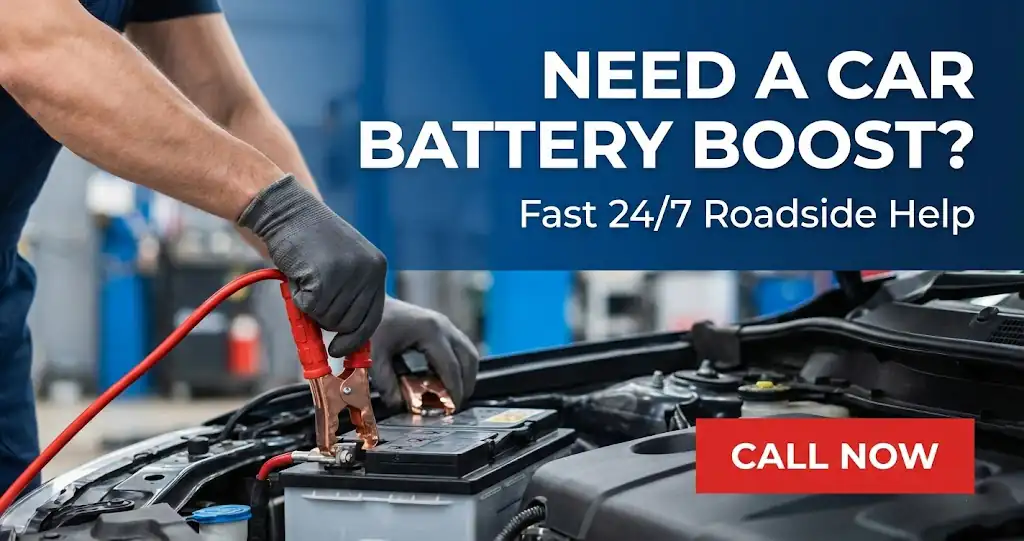
Not confident with DIY? Edmonton Towing offers 24/7 professional battery boost service. We safely bring your vehicle back to life. Call (780) 652-0521 and stay safe inside your car while we handle it.
Your car won’t start. The dashboard lights are dim. You turn the key and hear nothing but a faint clicking sound. In Edmonton’s brutal winters, a dead battery is one of the most common roadside emergencies — and knowing how to respond can get you back on the road in 15 minutes instead of hours.
The good news: a battery boost is straightforward. Whether you have jumper cables and a helper vehicle, or you’re calling for professional assistance, this guide covers everything you need to know. We’ll walk you through the exact steps, explain what can go wrong, and show you when DIY is safe versus when you need a professional technician.
This comprehensive guide covers how to safely boost a car battery, what equipment you need, pricing, critical mistakes to avoid, and Edmonton-specific winter tips that could save your life.
What You Need: Equipment Checklist for Boosting
Before you attempt to boost a car battery, make sure you have the right equipment. Here’s what’s essential:
Jumper Cables (10–20 feet) — Get heavy-gauge cables rated 4–6 AWG for proper power transfer. Cheap, thin cables won’t carry enough current.
Helper Vehicle with Working Battery — A second car with a healthy battery that’s similar in size or larger. A pickup truck’s battery works great for a smaller sedan, but the reverse is risky.
Safety Glasses & Gloves — Protect yourself from battery acid splash (it can cause serious burns) and corrosion on terminals.
Battery Terminal Cleaner — If terminals are corroded (white, blue, or green crusty buildup), you’ll need a cleaner or baking soda solution to remove it.
Portable Jump Starter (Optional but Recommended) — These compact devices eliminate the need for a second vehicle. Great for Edmonton winters when you’re stranded alone.
8 Steps to Safely Boost Your Car Battery
Follow this sequence exactly. Even small mistakes can damage your car’s electronics or create safety hazards:
Position vehicles safely and close together. Park both vehicles (yours with the dead battery and the helper car) on level ground, close enough that jumper cables reach both batteries without stretching (typically 18–24 inches apart). Keep away from traffic. Turn off both engines completely.
Turn off all electrical devices on both vehicles. Switch off headlights, radio, windshield wipers, climate control, and any infotainment systems. This prevents voltage spikes that can permanently damage your Engine Control Unit (ECU) and cost $1,000+ to replace.
Inspect and clean battery terminals if corroded. Look for white, blue, or green crusty buildup on the battery terminals. If present, disconnect the negative (–) cable from the dead battery and scrub terminals with battery cleaner or a baking soda + water paste. Corroded terminals reduce boost effectiveness by 50% or more. Let dry completely before proceeding.
Connect RED cable to dead battery positive (+) terminal first. This is the critical first step. The positive terminal is marked with a “+” symbol and usually has a red plastic cover. Clamp the red cable firmly — a loose connection can cause dangerous arcing and won’t transfer power effectively.
Connect other RED cable end to helper battery positive (+) terminal. Now both positive terminals are connected, establishing the positive power path. Twist or clamp the connection tightly. This ensures maximum power transfer from the good battery to your dead one.
Connect BLACK cable to good battery negative (–) terminal ONLY. This is the opposite order from the red cables. Attach the black cable to the helper vehicle’s negative (–) terminal, marked with a “–” symbol. Do NOT connect it to the dead battery’s negative terminal yet.
Clamp BLACK cable to unpainted metal surface on dead car’s engine. This is critical for safety. Instead of connecting to the negative battery terminal (which can cause dangerous hydrogen gas explosions), clamp the other end of the black cable to an unpainted metal surface on the engine block, frame, or valve cover — far away from the battery. This grounds the circuit and prevents sparks near the battery.
Start helper vehicle, wait 2–3 minutes, then start yours. Start the helper car and let it run for 2–3 minutes. This allows the good battery to share charge with the dead one. Then attempt to start your vehicle. If it doesn’t start after 30 seconds of cranking, wait 5 minutes and try again. Once started, let both vehicles run for at least 20 minutes before disconnecting cables in reverse order: black from your car, black from helper car, red from helper car, red from your car.
⚠️ Critical Mistakes That Damage Your Car
Wrong cable order: Connecting cables out of sequence causes voltage spikes, electrical fires, and battery explosions. Always: red to dead (+), red to good (+), black to good (–), black to engine ground. Disconnect in reverse.
Connecting negative to dead battery: Never clamp the black cable directly to the dead battery’s negative terminal. This creates dangerous sparks near explosive hydrogen gas. Always use an unpainted metal surface on the engine block.
Hybrid or electric vehicles: DO NOT attempt to jump-start hybrid or fully electric vehicles. These use 400–600+ volts that can cause serious injury or death. Always call professional service.
Repeated cranking damages the starter motor and can destroy fuel pumps ($300–$800 to replace). If the car won’t start after 2–3 attempts, stop and call for professional help.
Alternative: Using a Portable Jump Starter (No Helper Vehicle Needed)
If you don’t have access to a second vehicle, a portable jump starter is a game-changer. These compact battery packs cost $50–$200 and work independently, making them essential for Edmonton winters:
Ensure the portable starter is fully charged. Check the battery indicator before you need it. Keep it charged during winter months.
Turn off your vehicle and disconnect accessories. Same safety rules apply — no headlights, radio, or electronics running.
Connect red clamp to positive (+) terminal. Attach the starter’s red clamp to your car’s battery positive terminal.
Connect black clamp to unpainted metal surface. Same as cable boosting — clamp to engine block or frame, not the battery negative terminal.
Press power button, wait 30 seconds, then start your vehicle. Let the portable starter energize your battery for half a minute before cranking.
Let your car run 20+ minutes to recharge the battery. This allows your alternator to rebuild the charge.
Portable starters are ideal for single drivers, remote areas, and situations where finding a helper vehicle is impossible. Prices range $50–$200, and they pay for themselves in one roadside emergency.
DIY Battery Boosting vs. Professional Service: When to Call
Knowing how to boost your battery yourself is valuable, but professional service has clear advantages in critical situations:
🚗 DIY Boosting
- Free if you have cables and helper vehicle
- Takes 15–30 minutes on-site
- You stay in control of the process
- Risk: Electrical damage if done wrong
- No diagnosis of underlying problems
- Requires confidence and knowledge
🔋 Professional Service
- Certified technicians trained in safety
- Professional-grade equipment
- Diagnostic testing identifies root cause
- 24/7 availability across Edmonton
- Liability insurance if damage occurs
- Cost: $75–$150 for boost service
Dead Battery? We’ll Get You Moving — 24/7
Professional battery boost service anywhere in Edmonton • 20–45 min response
How Much Does a Battery Boost Cost in Edmonton?
Professional battery boost pricing varies based on location, time of day, and your vehicle type. Here’s what to expect:
💡 Why Professional Boosting Costs Less Than You’d Think
A $100 battery boost service is significantly cheaper than alternative options: towing to a mechanic ($85–$125) plus time spent waiting, or purchasing roadside assistance membership ($100–$200/year). Plus, our technicians diagnose the underlying problem so you know if it’s just a dead battery or a failing alternator.
For detailed breakdowns of all towing and roadside services available, visit our roadside assistance page.
Edmonton Winter Battery Survival: Prevention Tips
Edmonton winters reach -30°C to -40°C, cutting battery power in half. Prevention is far better than needing a boost at -35°C on a highway. Here are critical strategies:
❄️ Essential Winter Battery Care
Install a block heater: Heat the engine oil and coolant before starting. A pre-warmed engine needs less starter load and battery power. Plug in for 4–8 hours in extreme cold.
Use a battery blanket: Thermal insulation keeps the battery warmer. Battery performance drops 50% at -20°C and 90%+ at -40°C. An insulating blanket can add 5–10°C of effective warmth.
Keep a trickle charger handy: Smart chargers slowly maintain battery voltage overnight. This prevents your battery from ever dropping to dangerous levels during harsh winters.
Park in a garage if possible: Even an unheated garage is significantly warmer than -40°C outside. Every degree helps.
Reduce idle time: Warm up your car for only 30 seconds to 1 minute. Modern engines warm faster while driving than idling.
Replace batteries that are 3+ years old before winter arrives. Don’t wait for failure. A proactive $150 battery replacement beats a $500+ emergency tow in -40°C weather.
Signs Your Battery Needs Replacement, Not Just a Boost
Sometimes a boost is temporary fix for a dying battery. Watch for these red flags:
- Dies repeatedly: If your battery needs boosting more than once per month, it’s failing.
- Won’t hold charge: Battery dies within 24–48 hours of boosting — alternator is likely fine, battery is shot.
- Slow cranking: Engine turns over sluggishly even after a successful boost — battery can’t deliver sufficient current.
- Age 3–5+ years: Most car batteries last 3–5 years. Beyond that, replacement is imminent.
- Visual damage: Cracked case, leaking fluid, swollen sides, heavy corrosion, or broken terminals.
- Check Engine light: Battery or alternator warning lights stay on after boosting.
- Winter start failures: Won’t start reliably below -20°C despite recent boosting.
If you notice any of these, call for professional battery boost and diagnostic service. We can test your battery voltage and recommend replacement before it strands you.
Frequently Asked Questions About Boosting Car Batteries
How long does it take to boost a car battery?
A typical DIY boost takes 15–30 minutes total (setup, connections, waiting, engine start). Professional service adds diagnostics but is still 20–30 minutes on-site.
Can I drive immediately after a boost?
Yes, but drive for at least 20–30 minutes at highway speeds to allow the alternator to fully recharge the battery. Short city driving won’t charge it adequately.
What’s the difference between a dead battery and a weak alternator?
A dead battery accepts a boost and holds charge while driving. A weak alternator results in the battery dying again within hours or days. If it dies repeatedly after boosting, have a mechanic test your alternator.
Can improper boosting damage my car’s computer?
Yes. Voltage spikes from wrong cable connections can permanently damage the ECU (Engine Control Unit), transmission computer, and other electronics. This is why following the correct cable sequence is critical. ECU replacement costs $1,000–$3,000.
Is it safe to boost a car during a thunderstorm?
No. Avoid boosting during lightning storms. Metal jumper cables conduct lightning and put both drivers at risk. Wait for the storm to pass or call for professional assistance.
What voltage should a healthy car battery have?
A healthy 12-volt battery reads 12.6 volts when the engine is off. While running, it should read 13.5–14.5 volts (alternator charging). Below 12 volts indicates significant discharge.
Can I boost a smaller car with a larger car’s battery?
Yes, a larger battery works fine boosting a smaller car. The opposite (small battery boosting a large truck) is risky — it drains the smaller battery too much. Portable jump starters solve this problem.
How do I prevent battery terminal corrosion?
Apply dielectric grease to terminals annually. Keep terminals clean and tight. Wash road salt off after winter. Check connections monthly. Corrosion buildup reduces power transfer by 50%+ and must be cleaned before boosting.
What if jumper cables spark heavily when connecting?
Minor sparks on the final connection are normal. Heavy sparking indicates wrong cable order or loose clamps. Stop immediately, disconnect all cables, and recheck. If sparking persists, do not attempt further boosting — call professional battery boost service.
How often should I test my car battery?
Test battery voltage monthly, especially before winter. Have a professional load test annually (many auto parts stores offer free testing). Replace batteries 3–5 years old proactively, before they fail unexpectedly.
Professional Battery Boost Service
Available 24/7 across all Edmonton neighborhoods • Certified technicians • Diagnostic testing included